Underground Utility Trenching, Hydrovac Daylighting & Septic Excavation
Everything a property depends on underground, from the water service and sewer to gas, power, fibre and an acreage septic system, arrives through a trench. We dig those trenches around Calgary to the depth each line needs, expose existing utilities by hand or hydrovac before a machine gets near them, and backfill so nothing settles or freezes later.
What This Work Covers
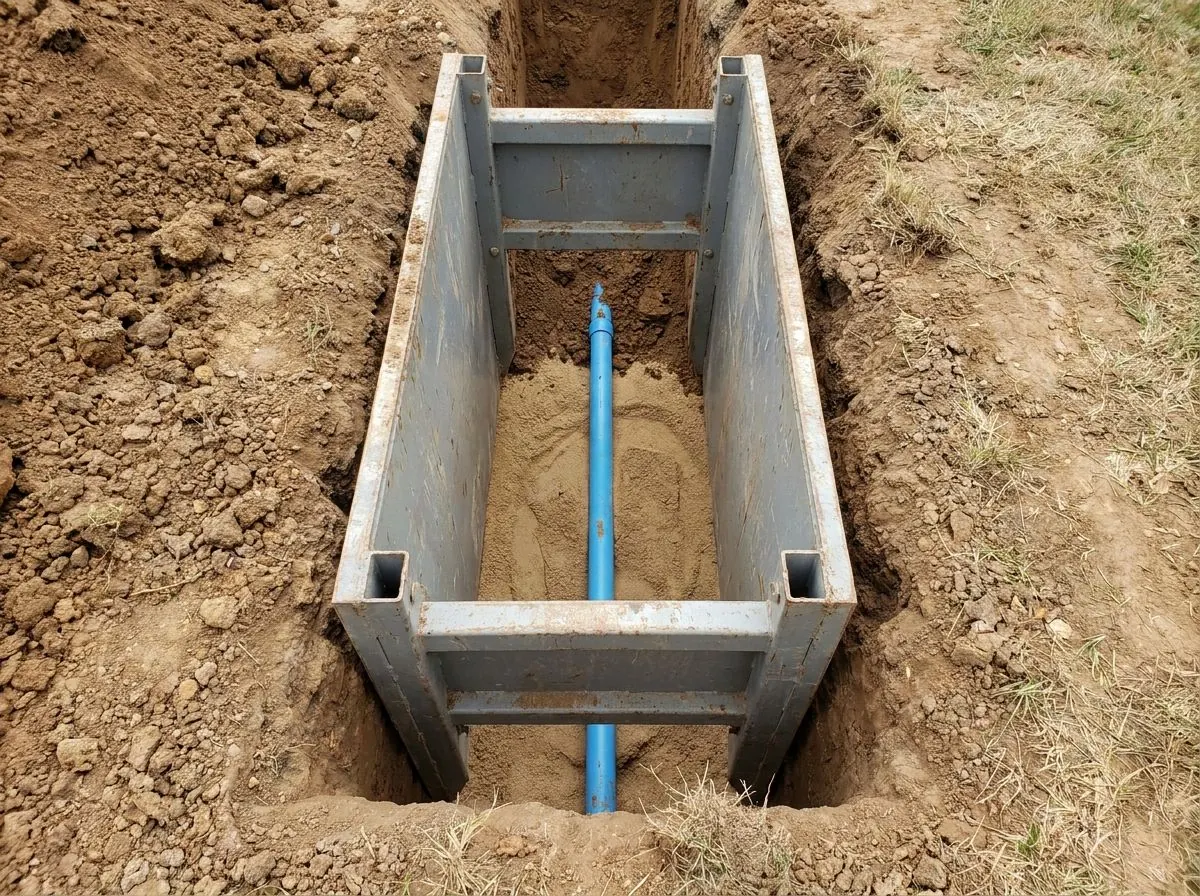
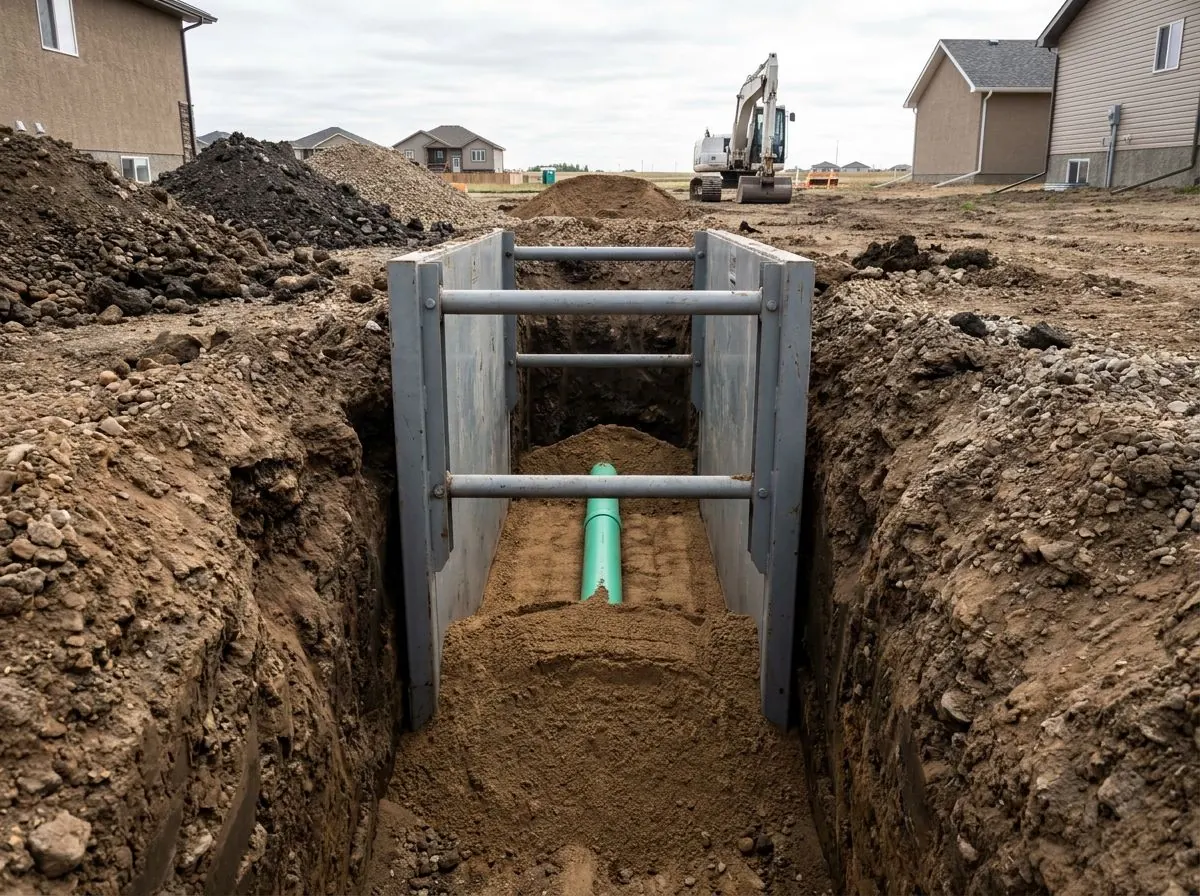
This family of work splits by what goes in the ground and how deep it sits. Deep utility trenching carries water, sanitary and storm service lines, which in Calgary need at least 2.7 m (9 ft) of cover in clay and 3.3 m (11 ft) in gravel for water, 2.5 m for sanitary mains and 1.2 m for storm mains. Those depths bring trench boxes, dewatering, bedded pipe and tested backfill, plus a City connection in the right-of-way that must be installed by a utility indemnified contractor. Shallow utility trenching carries gas lines, electrical conduit, fibre and power feeds to garages, shops and backyard suites, at depths set by the utility and the installer who holds the permit.
Hydrovac daylighting is the non-destructive side of the category. Pressurized water loosens soil and a truck-mounted vacuum lifts it away, so a buried line can be uncovered and measured without a bucket touching it. It is how existing utilities are exposed inside the hand-expose zone, 1 m either side of the locate marks and 5 m for high-pressure pipelines, before either kind of trench crosses them. It also cuts slot trenches along proposed routes, digs test holes for piles and posts, keeps working in frozen ground, and sends its slurry to an approved waste facility.
Septic system and field excavation serves acreages that are not on piped sewer. Under the Alberta Private Sewage Systems Standard of Practice 2021, a certified installer designs the system and obtains the county permit, and we dig the soil test pits, tank holes, treatment field trenches and mound bases to that design. The four services share a discipline: locate first, expose what is buried, dig no deeper or wider than the job needs, protect anyone in the hole, and put the ground back in lifts that stay put. What changes is the depth, the regulator and the trade who installs what goes in the trench.
Trenching & Hydrovac Services
Deep Utility Trenching (Water, Sewer & Storm)
Shored, bedded trenches for water, sanitary and storm service lines.
How it works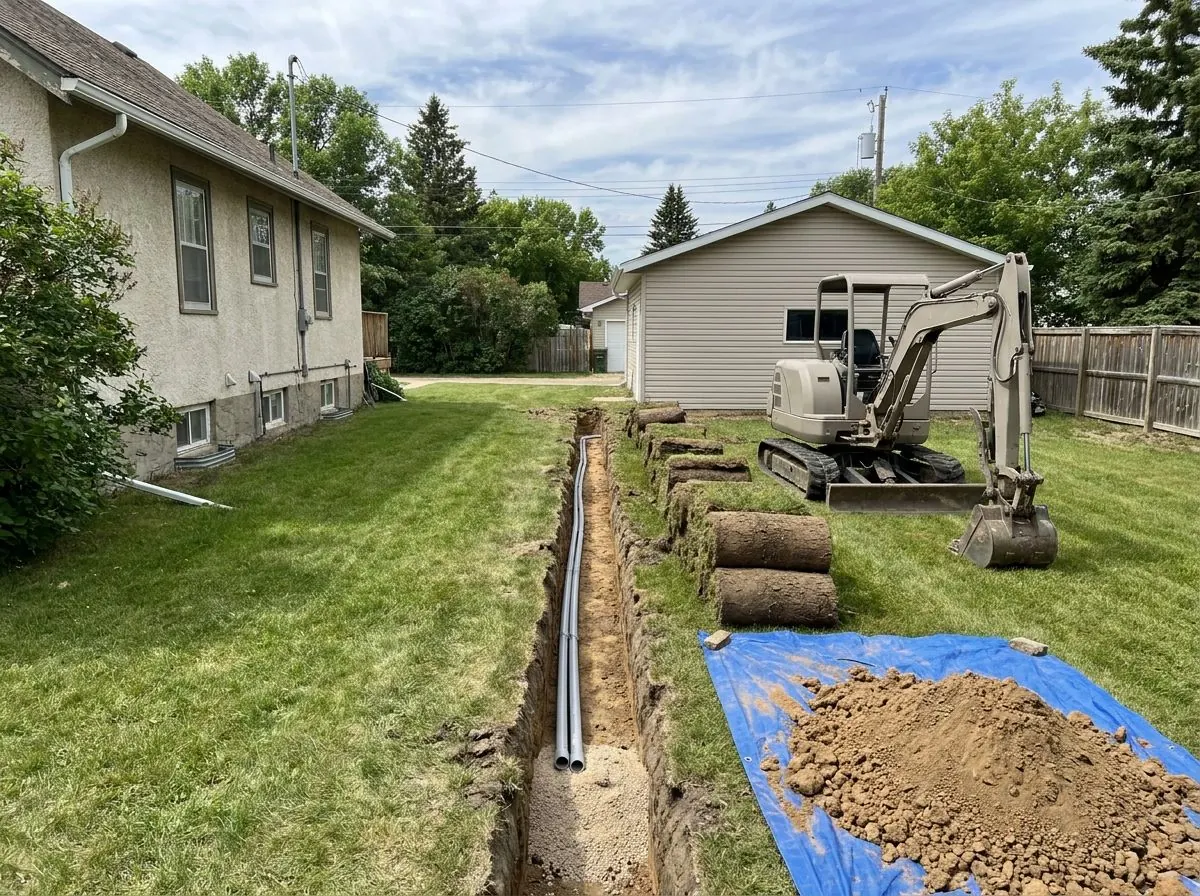
Shallow Utility Trenching
Narrow trenches for gas, electrical conduit, fibre and suite power feeds.
How it works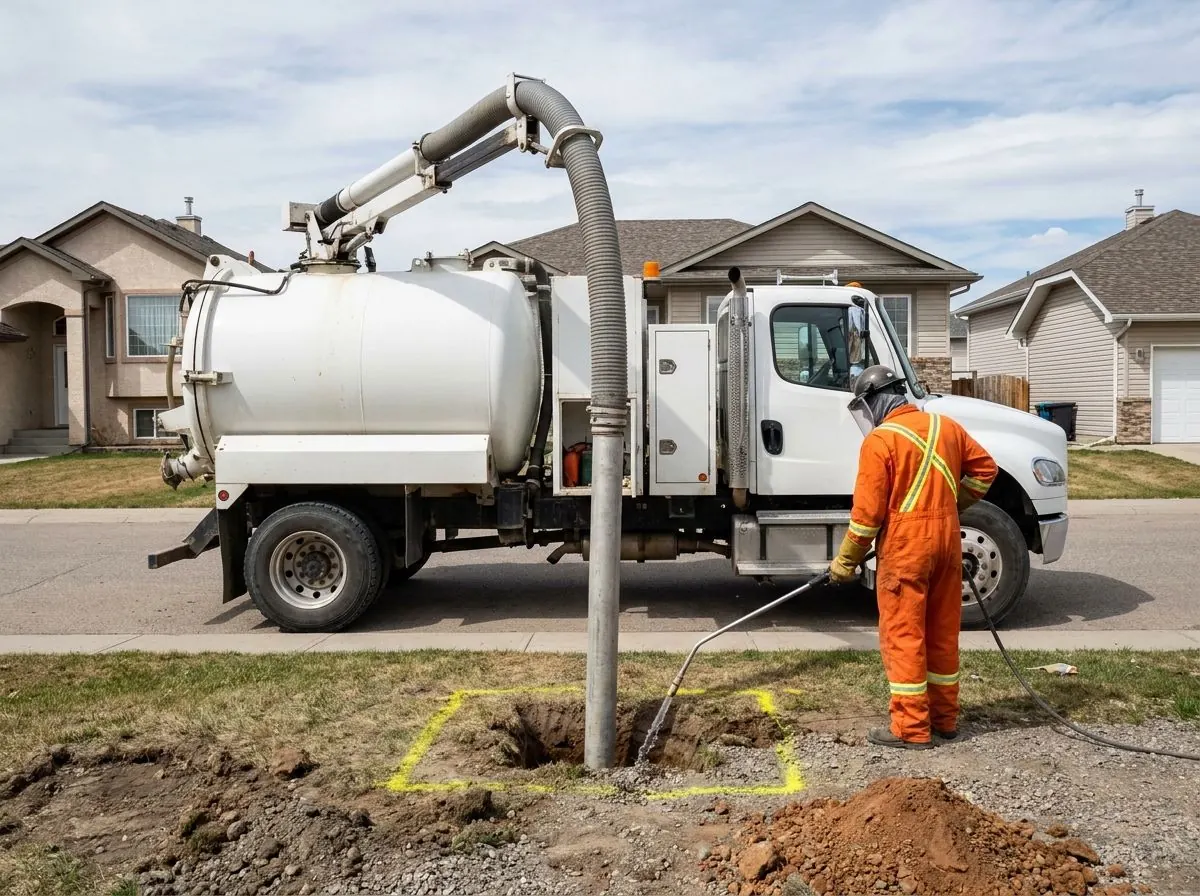
Hydrovac & Non-Destructive Daylighting
Non-destructive digging to expose buried lines before any machine gets close.
How it works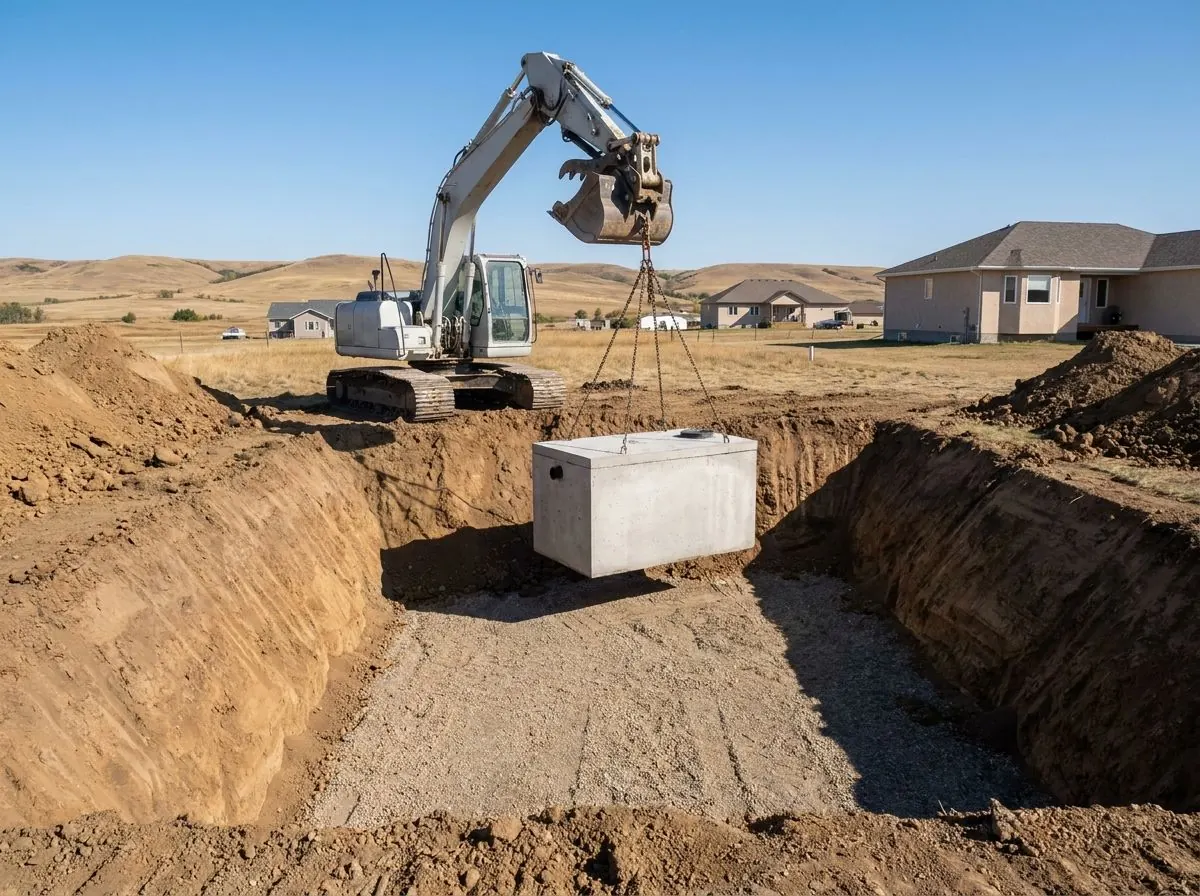
Septic System & Field Excavation
Test pits, tank holes and treatment field trenches for acreage septic systems.
How it worksChoosing Between Them
- Water, sewer or storm line
- Choose deep utility trenching for planned service replacement or a new service connection. Calgary cover depths put these trenches well past the 1.5 m point where protection is required for workers in them, and they can go past 3 m, where protective structures must be engineer-designed. If the line is leaking or backing up right now, use emergency dig-outs instead.
- Gas, power, fibre or a suite feed
- Choose shallow utility trenching when an electrician, gas fitter or provider needs a narrow trench to a garage, shop, backyard suite or acreage building. Depth and bedding come from the installer, and every existing line crossed on the way is exposed first.
- Finding or protecting what is already buried
- Choose hydrovac daylighting when lines have to be seen before digging near them, when frozen clay makes hand exposure impractical, or when a small hole matters because of pavement, landscaping or a crowded sidewalk. It is often booked alongside one of the trenching services rather than instead of it.
- An acreage with no sewer main
- Choose septic system and field excavation when a parcel needs a new or replacement private sewage system. Hire the certified installer first; the design and the county permit come before the excavator. Parcels on communal piped wastewater need a service trench instead.
Trenching & Hydrovac: Common Questions
Which underground utility jobs need a professional engineer involved?
Who is responsible for which part of the buried services on my property?
Can hydrovac and trenching be booked as one job?
Other Excavation Services
Talk to Us About Trenching & Hydrovac
Tell us about the site, what is there now and what is going in. We will recommend the scope that fits, including when a smaller job will do.