Site Preparation, Grading & Earthmoving Across Calgary and Rocky View County
Every foundation, slab, driveway and yard is only as good as the ground prepared for it. We clear the land, strip and stockpile the topsoil, move earth to design elevations with laser or GNSS machine control, compact the subgrade in thin lifts and build gravel access roads, so the next trade starts on ground that will hold its shape through a Calgary winter.
What This Work Covers
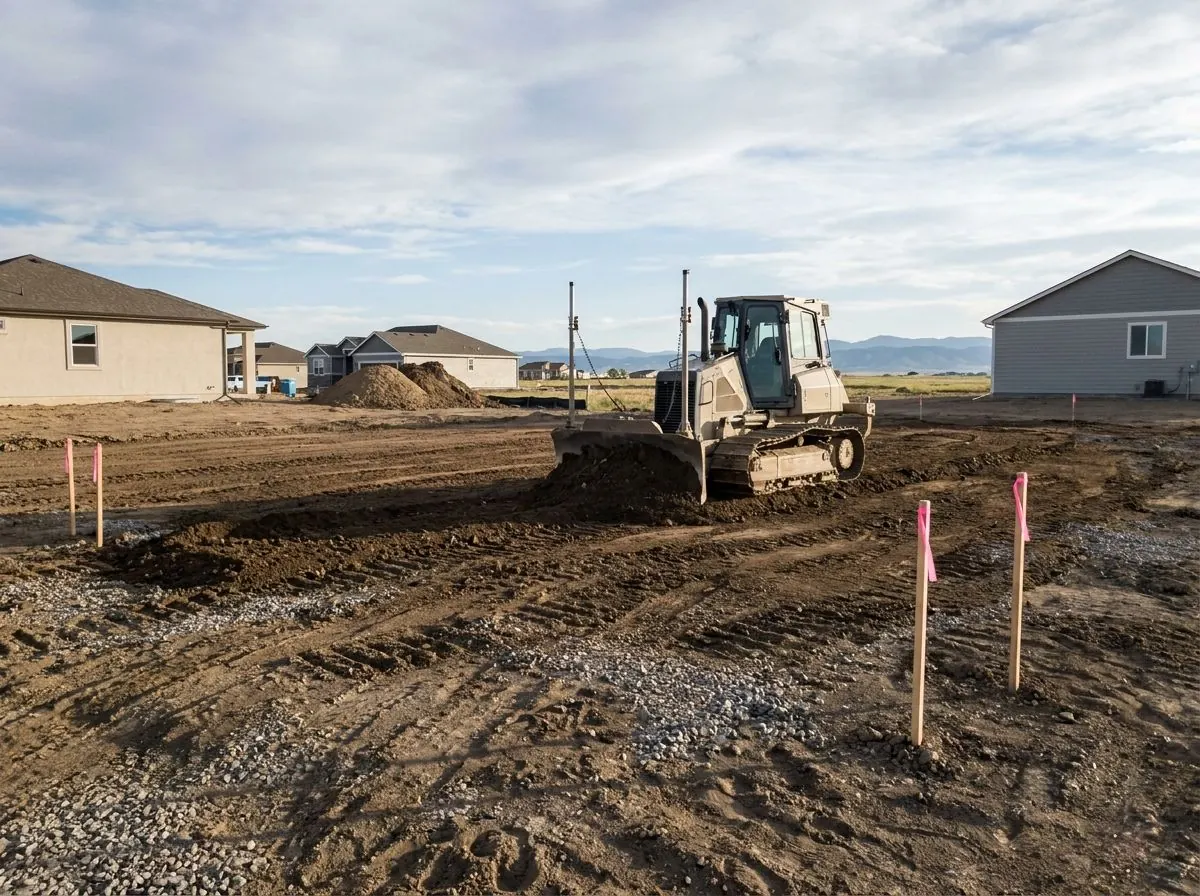
Site preparation is the stretch of work between raw land and the first form or footing. It usually runs in a fixed order. Land clearing takes out brush, trees, stumps, root masses and boulders so nothing organic is left to rot under a structure. Mass earthworks and site grading strip the topsoil, balance cuts against fills and shape the site to the elevations on the grading plan. Subgrade compaction and proof rolling turn that shaped soil into a firm platform that will not settle. The driveway and access road rough-in gives every truck and machine that follows a way in that stays usable when the weather turns.
The four services overlap on almost every project, but each answers a different question. Clearing asks what has to come out of the ground. Grading asks where the ground has to end up, and how water will leave it; in Calgary, that includes the minimum 4% fall within 1.2 m of a foundation called for in the City’s lot drainage guide. Compaction asks whether the ground will hold, and it is measured against a density target from a Standard Proctor test rather than judged by eye. The driveway rough-in asks how heavy traffic will reach the site, and it layers geotextile, sub-base and crushed gravel over a compacted subgrade.
What ties them together is sequencing and measurement. Topsoil stripped during clearing or grading is stockpiled for landscaping, not buried. Stump holes left by grubbing are filled and compacted as part of the grading. The subgrade that grading shapes is the same subgrade that gets proof rolled, and the access road built early becomes the haul route for everything after it. Where an engineer, a grading plan or a municipal specification sets the numbers, we build to those numbers and check them as we go, and independent testers and certifying professionals confirm the results.
Site Prep & Earthmoving Services
Mass Earthworks & Site Grading
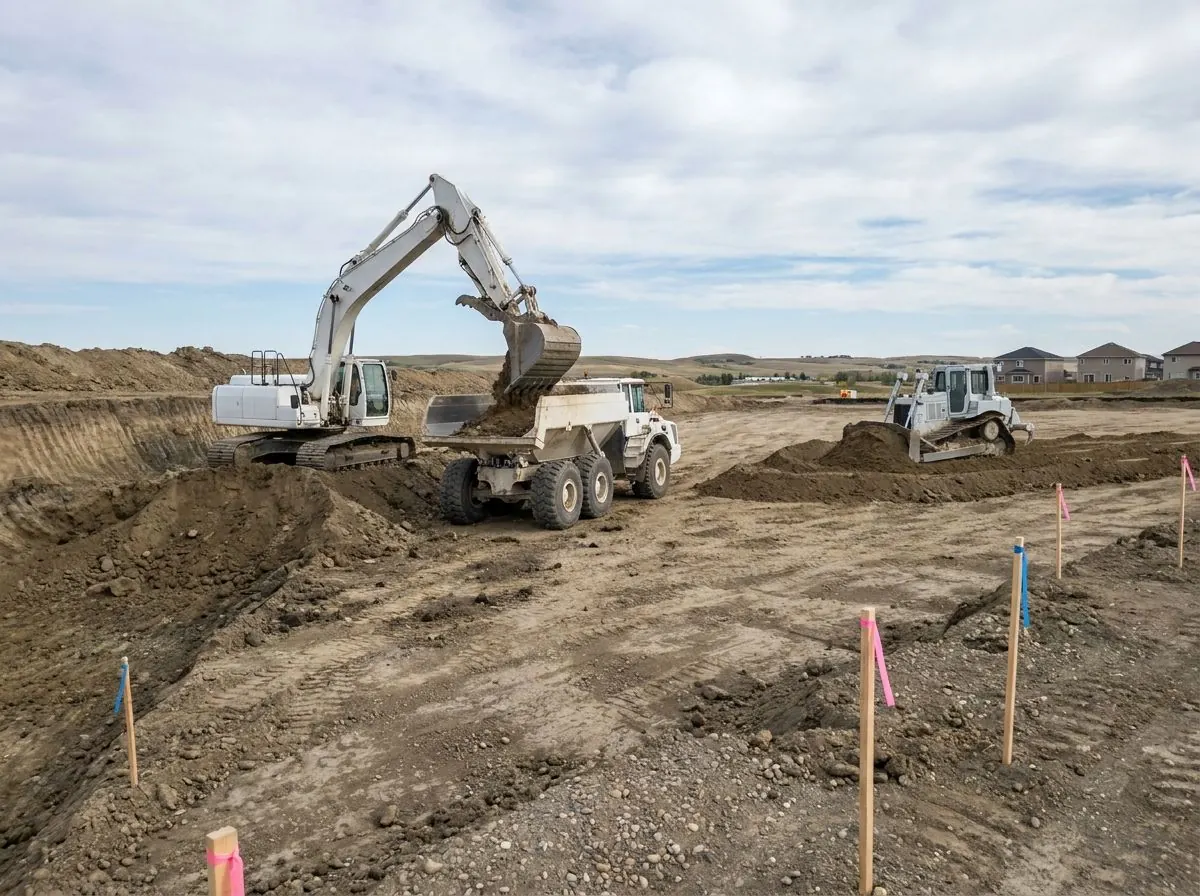
Cut and fill, topsoil stripping and laser or GNSS grading to design elevations.
How it works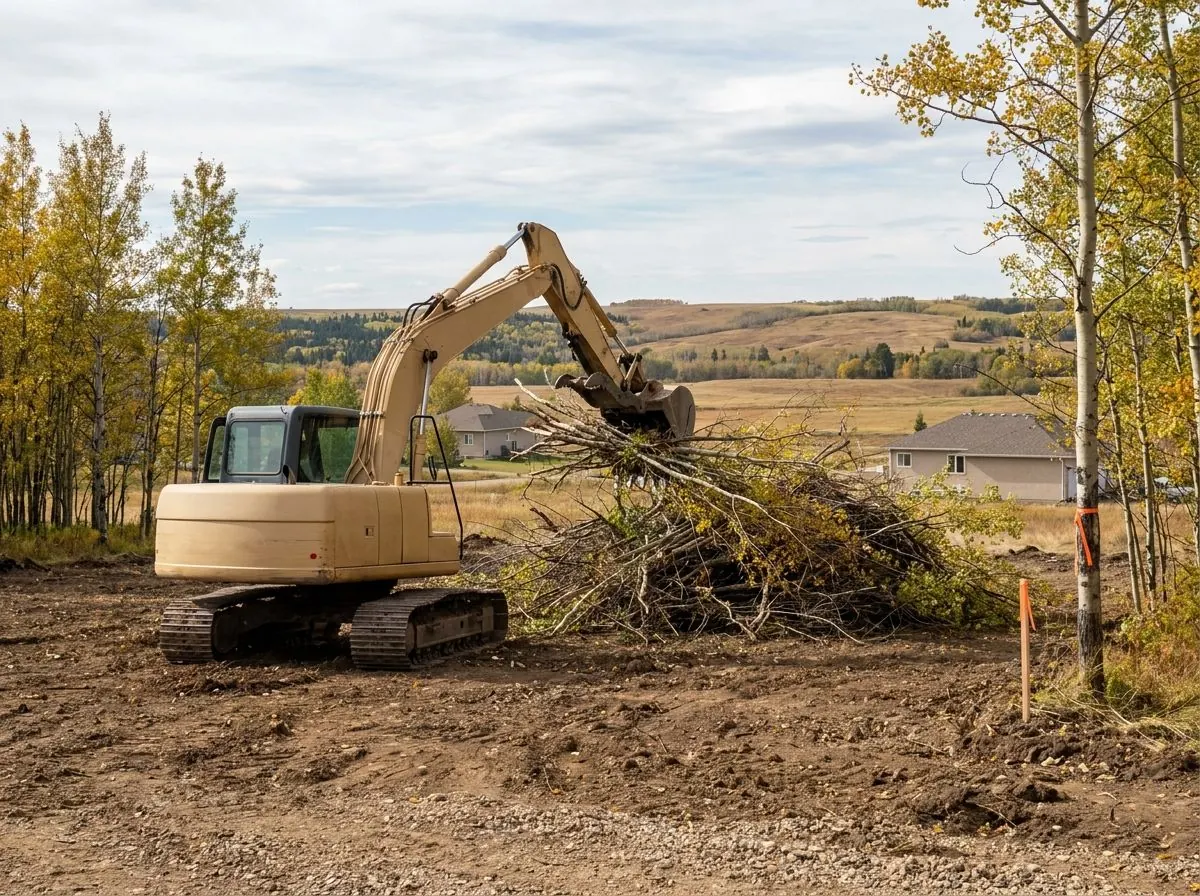
Land Clearing & Vegetation Removal
Brush, trees, stumps, roots and boulders removed; mulched or hauled away.
How it works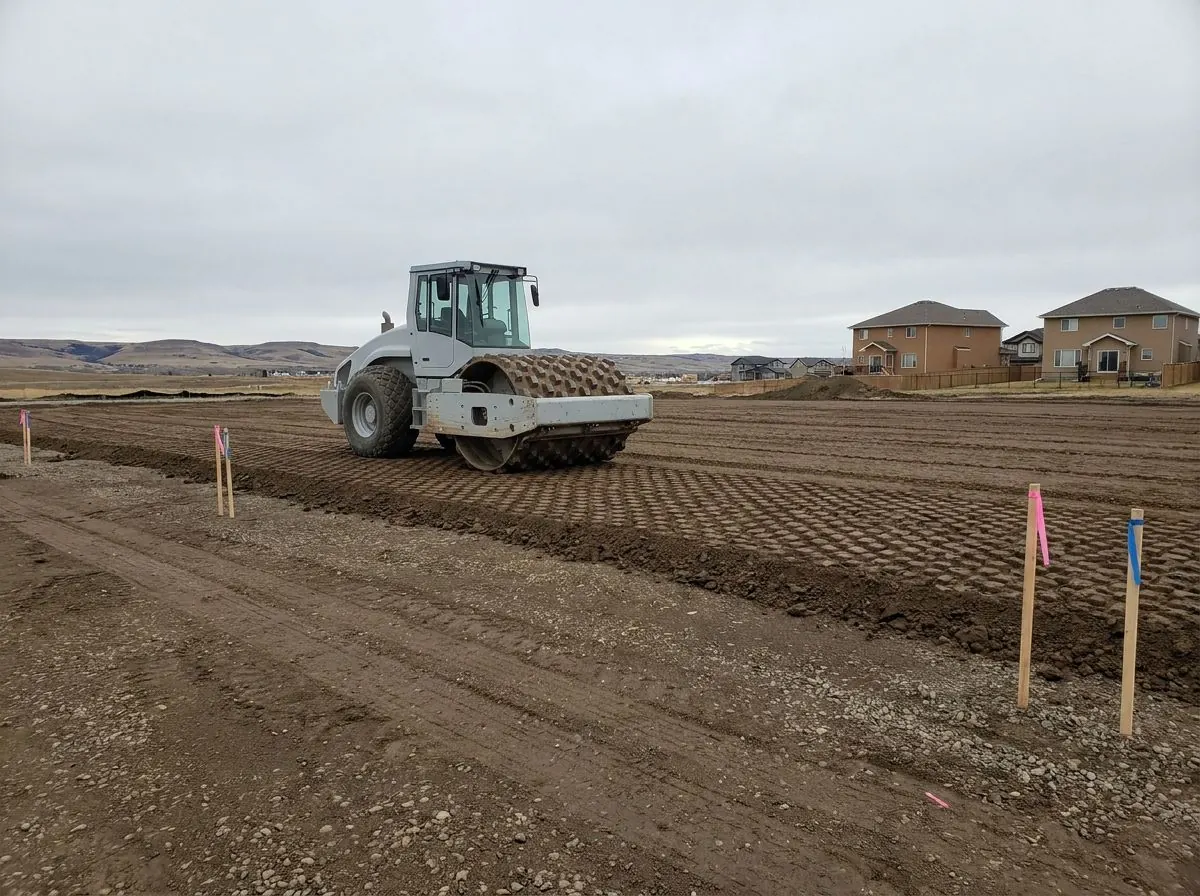
Subgrade Compaction & Proof Rolling
Lift-by-lift compaction, loaded-truck proof rolling and soft-spot repair.
How it works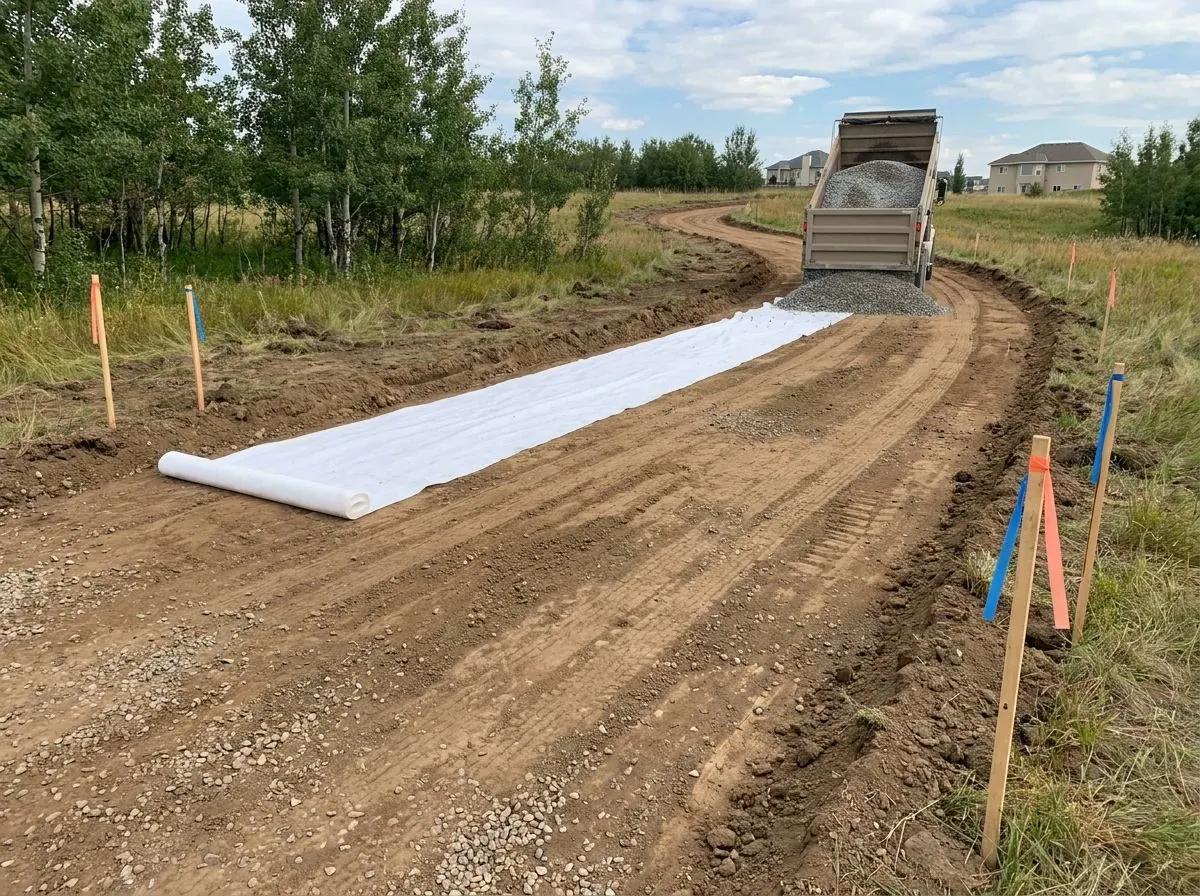
Driveway & Access Road Rough-In
Acreage driveways and access roads built on geotextile and crushed gravel.
How it worksChoosing Between Them
- Start with land clearing when the site is treed or overgrown
- If brush, trees, stumps or boulders cover any area that will be built on, driven on or graded, clearing comes first. Mulching suits ground staying green; building footprints need stumps and roots fully grubbed out.
- Choose mass earthworks and grading when elevations must change
- If the site has to be levelled, a walkout cut into a slope, or water redirected away from buildings, you need grading to a plan. It covers topsoil stripping, cut-and-fill balancing and rough and fine grade.
- Add compaction and proof rolling when something heavy goes on top
- Slabs, shop floors, parking areas, yards and roads need subgrade compacted in lifts at the right moisture and proof rolled for soft spots. On structural work, an independent tester confirms the density.
- Book the driveway rough-in early on acreage builds
- If trucks will be crossing open land to reach a building site, build the access road before construction traffic arrives. Stripping, fabric, sub-base and crushed gravel keep the site working in wet weather.
Site Prep & Earthmoving: Common Questions
In what order should site preparation work happen?
Can site preparation carry on through a Calgary winter?
What should I have ready before booking site preparation?
Other Excavation Services
Talk to Us About Site Prep & Earthmoving
Tell us about the site, what is there now and what is going in. We will recommend the scope that fits, including when a smaller job will do.