Demolition, Concrete Breakout & Soil Removal in Calgary
Before anything new is built on a Calgary lot, something old usually has to come out: a house or garage, a cracked slab or parking lot, soil an assessment has flagged, or the piles every dig leaves behind. We run demolition, concrete and asphalt breakout, impacted soil export and haul-off as one sequence, in the order the permits and the ground require.
What This Work Covers
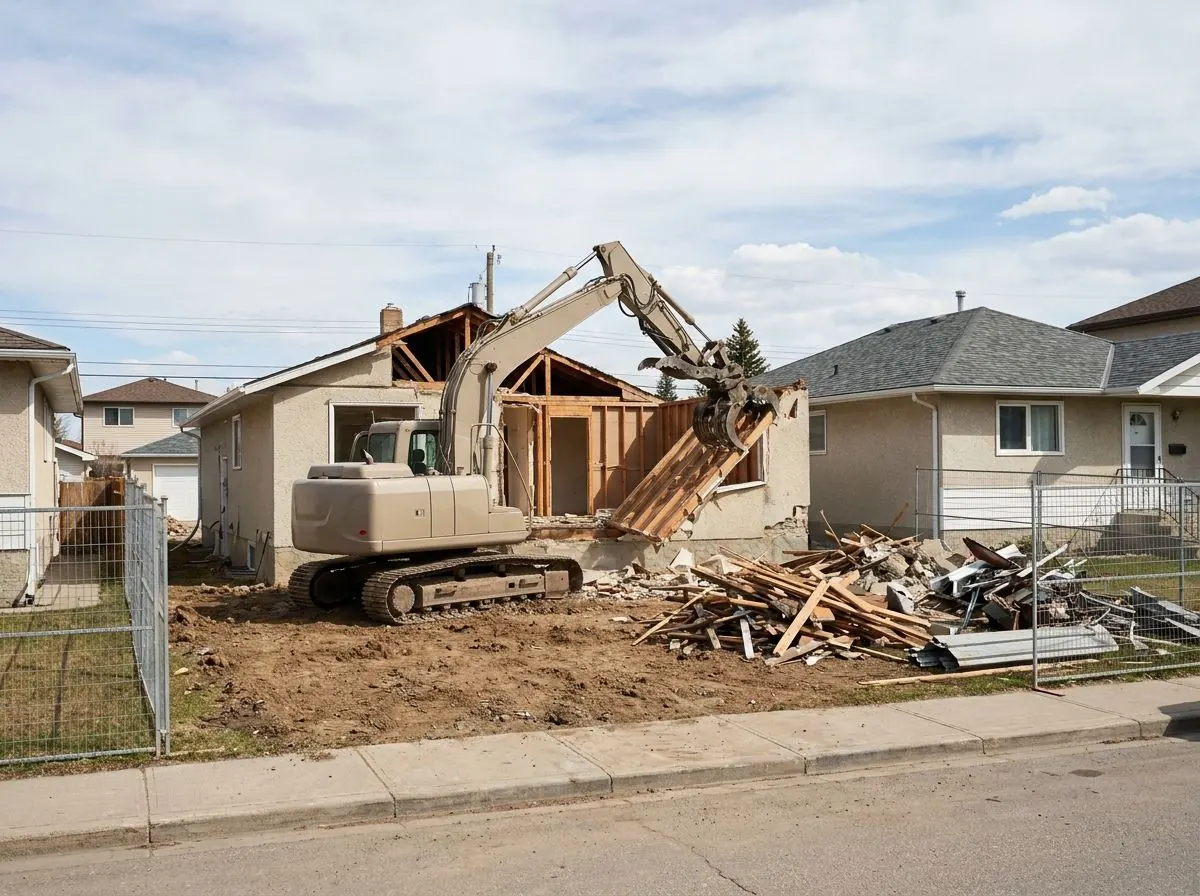
This category covers four kinds of removal work, and each one ends where the next begins. House and garage demolition takes a structure down to a level lot, from the roof to the last footing, after the asbestos inspection and any abatement are finished and the gas, power and water services are disconnected. Concrete slab and asphalt breakout removes surfaces without a building on them: driveways, garage slabs, patios, basement floors, truck aprons and parking lots, saw-cut where edges stay and broken with hydraulic breakers where they do not.
Hazardous soil removal is the regulated end of the family. When an environmental site assessment shows impacted soil, we excavate it to the limits the owner's environmental consultant sets, keep it apart from clean soil, and export it with a manifest and a weigh ticket for every load to a receiving facility arranged in advance. Site clean-up and haul-off is the everyday end: loading out clay, rock, clean fill, broken concrete and mixed debris from any job, sorted so each load is accepted where it goes, and leaving the site and street clean.
What ties the four together is sorting and sequence. Concrete and asphalt go to a recycler that accepts them, because City of Calgary landfills state they do not recycle concrete, asphalt or brick and charge a surcharge rate on loads mixed with them. Clean soil stays clean so it can go as clean fill. Suspect soil is set aside before it contaminates a clean pile. And the specialists who are not us, the abatement contractor, the environmental consultant and the indemnified contractor who cuts the water at the main, each finish their part before our machines start the next step.
Demolition & Removal Services
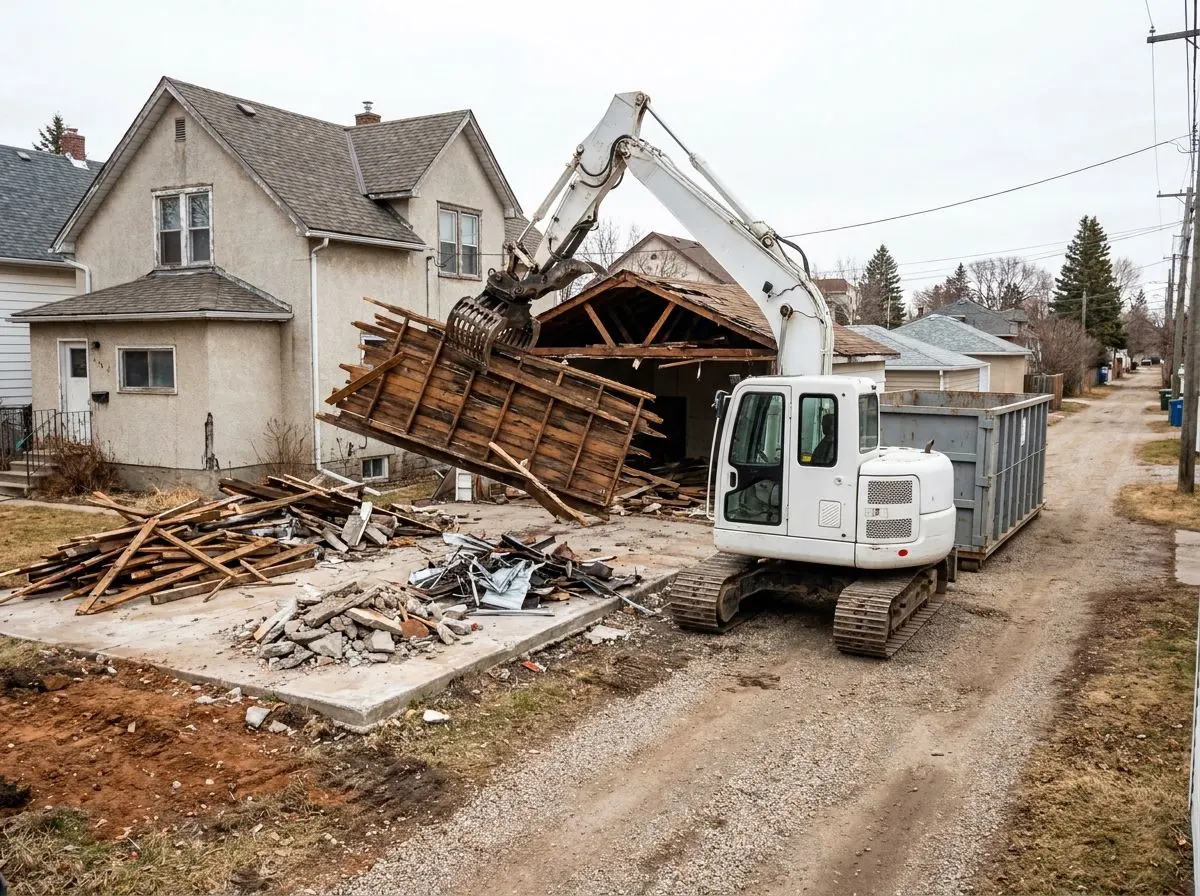
Residential Building & Garage Demolition
House and garage teardown, foundation removal and a level lot for the next build.
How it works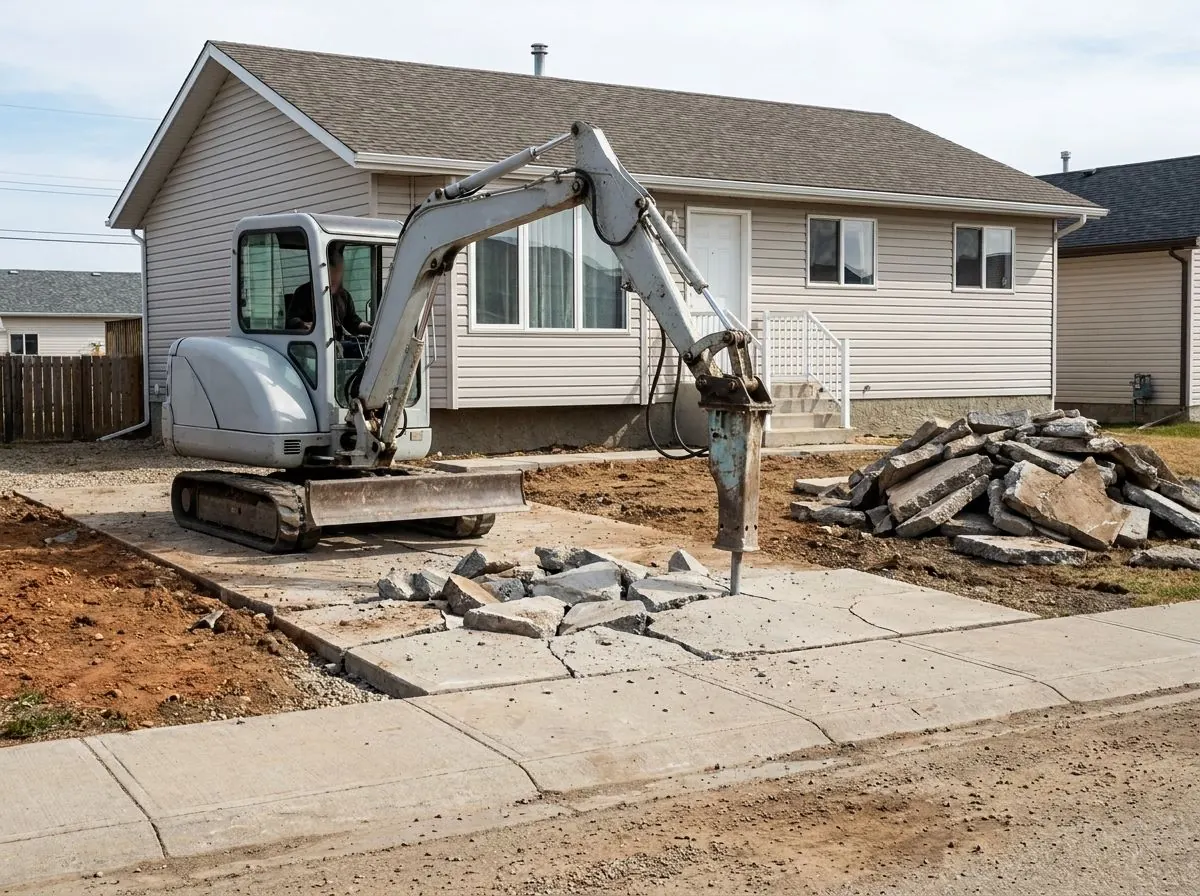
Concrete Slab & Asphalt Breakout
Driveway, slab, patio and parking lot tear-outs with clean saw-cut edges.
How it works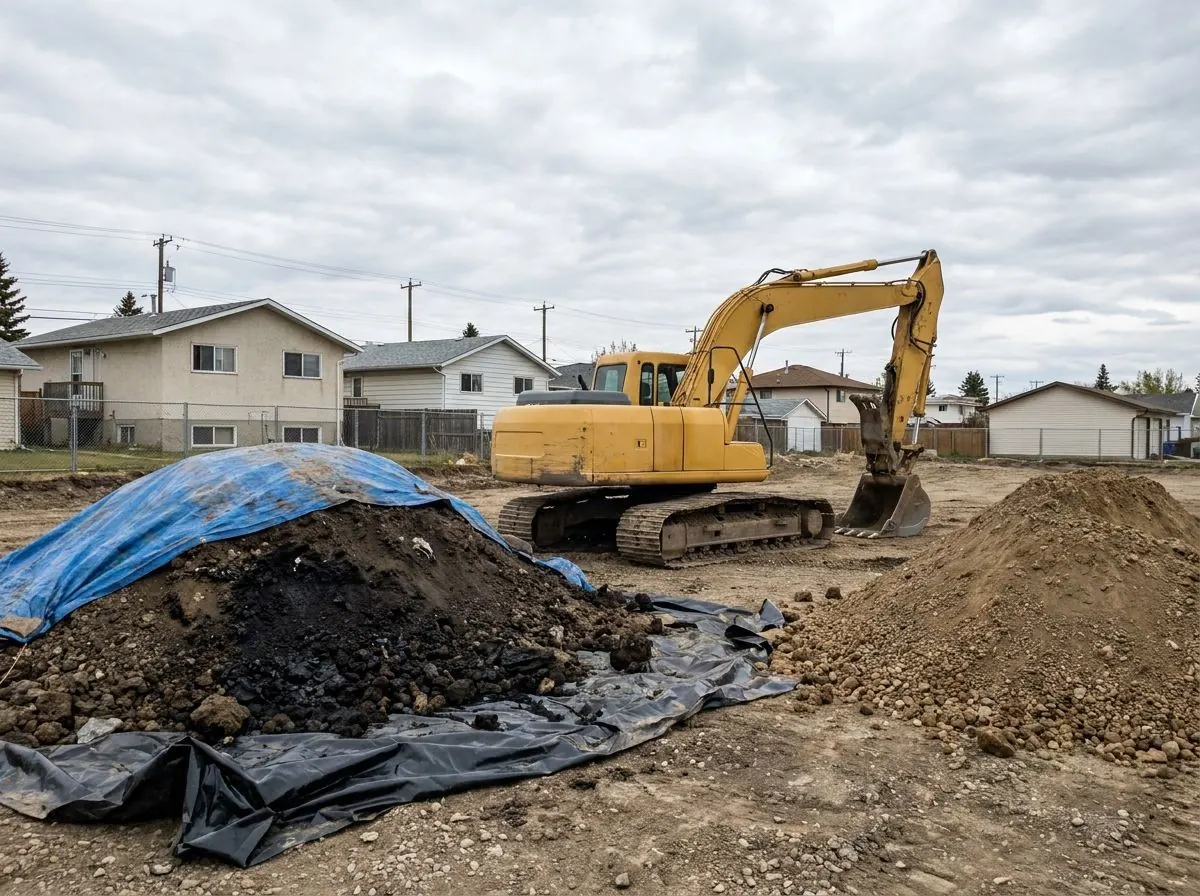
Hazardous Soil Removal & Export
Impacted soil dug to the consultant's limits, kept separate and exported with records.
How it works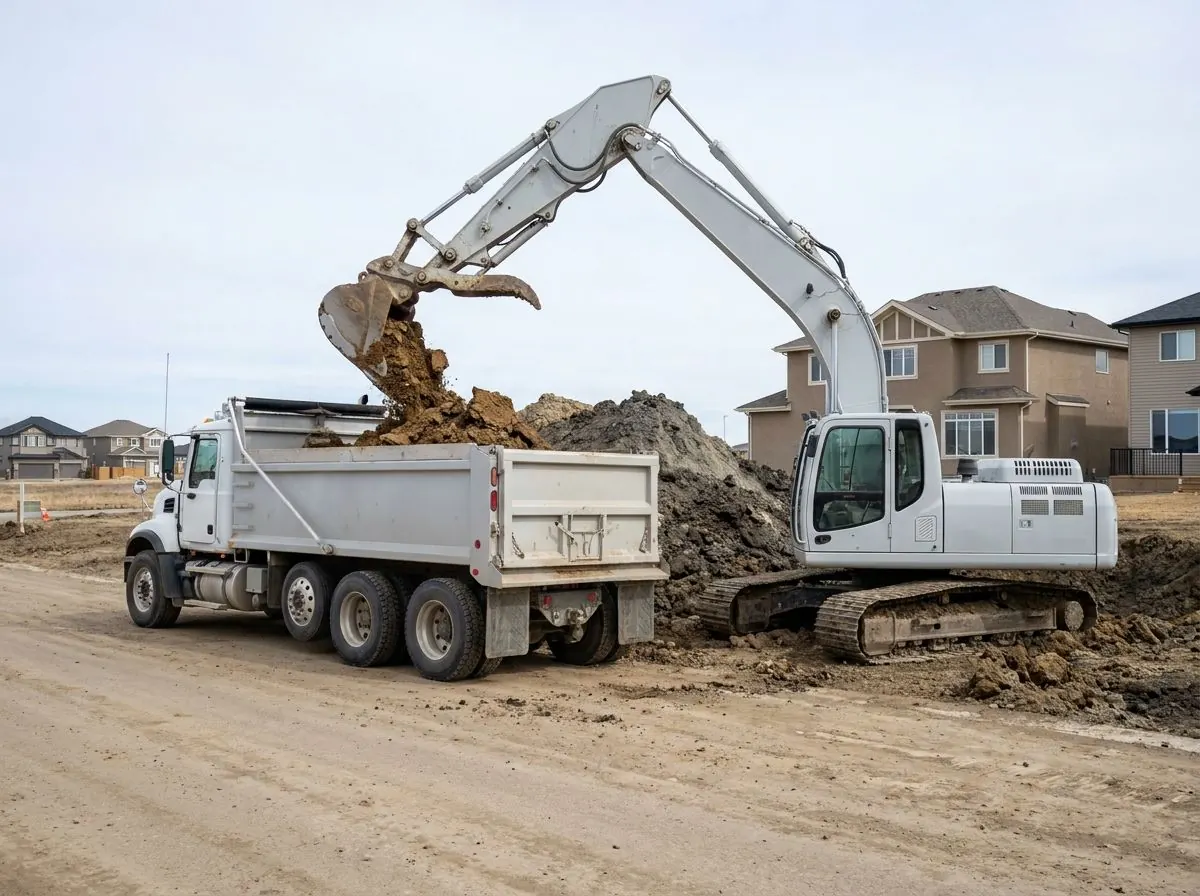
Site Clean-Up & Material Haul-Off
Dirt, clay, rock and debris sorted, hauled off and the site left clean.
How it worksChoosing Between Them
- A building is coming down
- Choose house and garage demolition. It includes the machine teardown, foundation and footing removal, sorting and a level or open lot, and it is where the demolition permit, asbestos clearance and service disconnections are handled in order.
- Only a surface is coming out
- Choose concrete slab and asphalt breakout for driveways, slabs, patios, basement floors and parking lots with no building involved. Saw-cut edges protect what stays, and locates cover lines that may be embedded in the slab.
- An assessment has flagged the soil
- Choose hazardous soil removal when a Phase II environmental site assessment shows impacted soil. Your environmental consultant directs the limits and the sampling; we dig, separate, truck and document to match.
- You have piles and debris to move
- Choose site clean-up and haul-off for clean dirt, clay, rock, concrete rubble and mixed debris left by any job. Loads are sorted by material and sent to the destination that accepts each one.
Demolition & Removal: Common Questions
Which other specialists are involved in a demolition or removal project?
What should I line up first to avoid delays on a teardown or breakout?
How can I keep disposal costs down across the whole project?
Other Excavation Services
Talk to Us About Demolition & Removal
Tell us about the site, what is there now and what is going in. We will recommend the scope that fits, including when a smaller job will do.