Site Clean-Up & Material Haul-Off in Calgary
We load and haul excavated dirt, clay, rock, broken concrete and mixed site debris off Calgary job sites, sorted so every load goes where it is accepted. Stockpiles are kept tidy and back from open holes, streets are kept clean, and the site is left graded and clear.
The Problem It Solves
Every excavation produces more material than people expect. A basement, a demolition, a utility trench or a regraded yard leaves piles of clay, topsoil, rock and broken concrete that do not fit back in the hole, and the soil takes up more room in a truck than it did in the ground. Owners who budget a handful of loads find the pile barely smaller after them. Meanwhile the stockpile blocks the driveway, sits too close to the open hole and turns the lot into a mud field after the first rain.
Material also has to go somewhere that will take it, and the rules differ by material. Clean fill, topsoil, clay mixed with concrete, and a pile of wood and shingles all have different destinations. A load that shows up at a City of Calgary landfill with the wrong mix is charged differently or turned away: the City states that it does not recycle concrete, asphalt or brick at its landfills and charges a surcharge rate on loads mixed with them, and topsoil is not accepted as clean fill. A turned-away truck is a wasted trip and a pile that did not move.
The last problem is what the neighbours see. Trucks cycling in and out of a residential street drag clay onto the pavement, the gutters carry it to storm drains, and the complaints reach the site before the builder does. A job that ends with ruts in the boulevard, stray chunks of concrete in the lawn and a smear of clay down the block does not feel finished, however good the digging was. Clean-up is part of the job, not an afterthought.
How It Works
We sort before we load. Topsoil is kept apart from subsoil, clean clay and gravel are kept apart from anything with concrete, wood or other debris in it, and rock and broken concrete go in their own piles. That separation decides where each load can legally and cheaply go: clean soil to a site or landfill accepting clean fill, concrete and asphalt to recycling facilities, topsoil to reuse, and mixed debris to disposal. Sorting on the ground is much cheaper than paying for the wrong load at the gate.
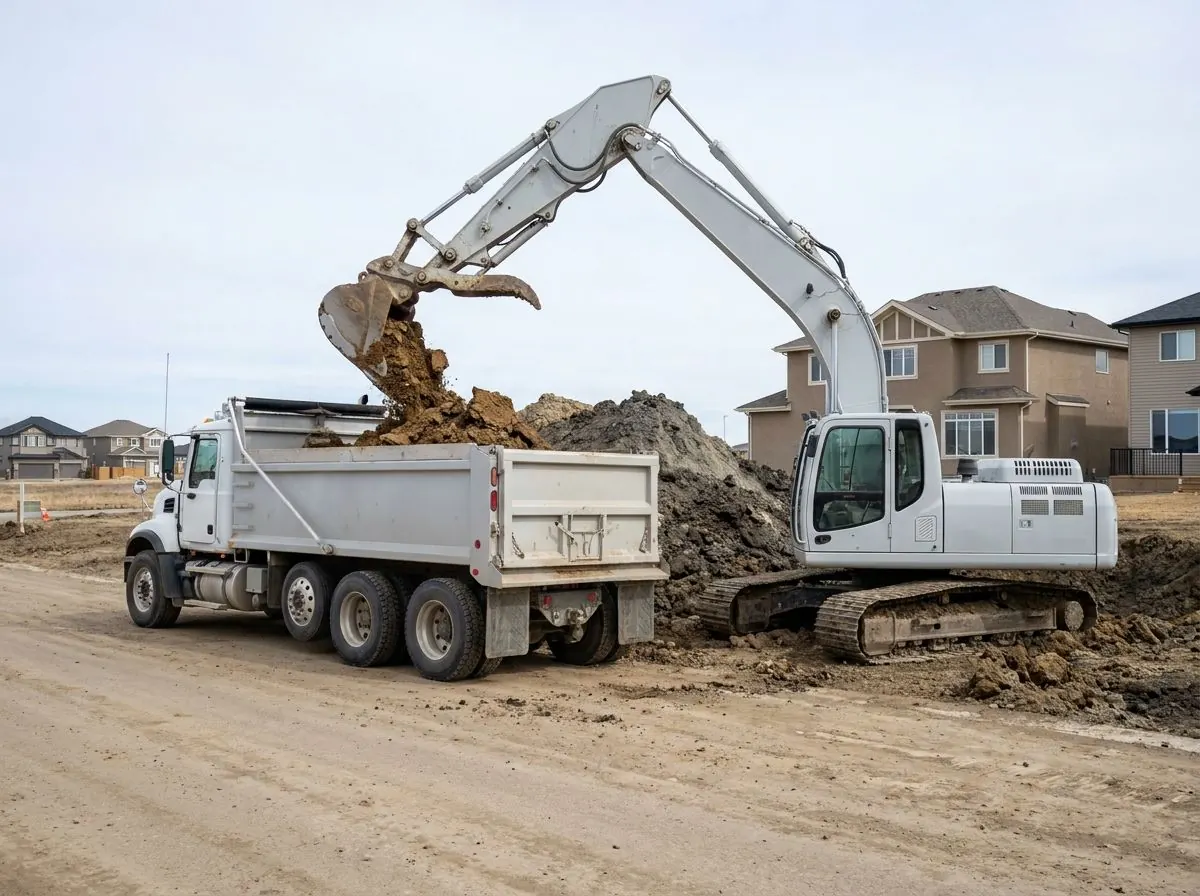
Truck choice follows access and distance. On narrow inner-city streets and laneways, tandem dump trucks turn and back in where a larger truck cannot. On open sites, tri-axles carry more per load, which cuts the number of trips. We plan volumes on loose material, not the size of the hole, because soil bulks as it is dug, and we pace the loading machine to the truck cycle so trucks are not idling on the street or stacking up at the curb. Dump truck mobilization is scheduled around the loading plan: trucks are called in once the destinations are confirmed and the first stockpile is ready, the count is adjusted as the pile shrinks, and the last trucks are timed to the final clean-up so the site is not left with a half-load of scrapings.
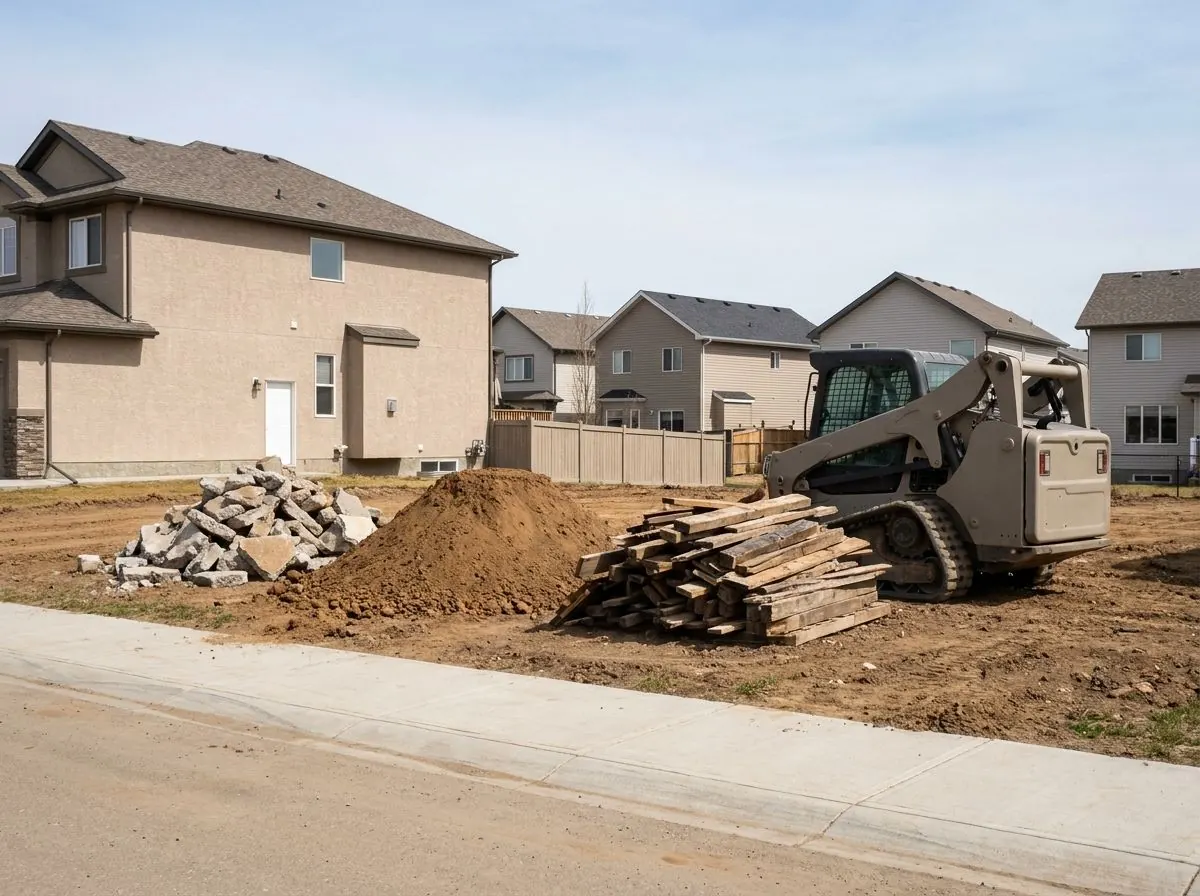
Stockpiles are placed where they are safe and useful: back from excavations, clear of drains, and close to the loading point. Truck exits are kept clean, tires are scraped before trucks reach pavement, and the street and laneway are swept as loads leave. When the last load is gone, we take up the rest of the loose material, rough-grade the surface and remove the stray debris. You get a site the next trade can walk onto and a street that looks the way it did before we arrived.
How the Job Runs, Step by Step
Identify every material on site
We walk the piles and the areas still to be dug and separate the material into types: topsoil, clean clay, gravel, rock, broken concrete and asphalt, and mixed debris. We estimate loose volume, not just the size of the excavation, because that is what the trucks carry. On commercial and industrial sites we flag that clean fill generally has to be tested before a City landfill will take it. Anything stained, oily or smelling of fuel is set aside and treated as a possible contaminated soil question.
Book destinations and approvals
Each stream gets a destination before trucks are booked. For clean fill going to a City landfill, commercial haulers must get a clean fill approval number 24 hours before arriving, and we check the City's posted acceptance status for the Spyhill, East Calgary and Shepard landfills. Concrete and asphalt go to recycling facilities, and mixed debris to a facility that accepts it. For hauling on Rocky View County roads, we confirm whether a Road Use Agreement or permit is needed.
Set up stockpiles and the truck route
Stockpiles are placed with their leading edge at least 1 m back from any open excavation and a face no steeper than 45 degrees. Piles are kept away from catch basins and the property line, and each material has its own pile so nothing gets mixed during loading. The truck path in and out is kept as short as possible, with a stabilized exit where the ground is soft. Sediment control measures matching the site size are set before hauling starts, not after the first rain.
Load and haul by material
The loader or excavator fills trucks one material at a time, and loads are tarped before they leave. Tandems handle tight streets and laneways; tri-axles handle open sites and longer hauls. Trucks are not loaded past legal limits, which depend on axle-weight rules and seasonal road bans, so volume per truck changes with the season. Load counts and tickets are kept by material so the owner sees what went where.
Final clean-up and grade
Once the stockpiles are gone, we scrape up the loose material left where they sat and load it out. The surface is rough-graded so it drains and is safe to walk, with ruts filled and stray concrete or debris removed. The street, laneway and sidewalk are swept and scraped clear of tracked clay. We walk the site with the owner or builder at the end so the handover is agreed, not assumed.
Equipment on This Job
Excavator for loading
A midi or full-size excavator loads trucks fast from a stockpile or straight from the dig, and its thumb picks concrete and wood out of soil so loads stay clean. Sitting beside the truck rather than driving to it keeps tire tracks and ruts to a small area.
Wheel loader or track loader
A loader moves material into separate stockpiles, keeps pile faces trimmed and tidy, and loads trucks where an excavator would be in the way. A compact track loader works on soft ground and finished surfaces without rutting them.
Tandem and tri-axle dump trucks
Tandems turn in narrow streets and back into laneways that a longer truck cannot reach. Tri-axles carry more per load on open sites, cutting the trip count. The mix is chosen for each job's access, haul distance and any seasonal road bans.
Loader-mounted sweeper
A sweeper attachment on a skid steer or compact track loader clears tracked clay from the street, laneway and sidewalk as loads leave and again at the end of the day, which keeps mud out of gutters and storm drains and keeps neighbours on side.
What Decides the Specification
Volume is the first driver, and it is measured loose. Soil dug from the ground bulks up: the same material takes more room in a truck box than it did in place, and clay and broken rock typically bulk more than sand and gravel. A hole's measured size therefore understates the trucking. Moisture matters too. Wet clay is heavier, so a truck may reach its weight limit before its box is full, and legal loads also shift with seasonal road bans. We plan the number of trips on loose volume and weight together, not on the dimensions of the excavation.
Material type is the second driver, because it decides the destination. Natural, unprocessed soil from an uncontaminated site can go as clean fill; topsoil, recycled aggregate and dried hydrovac residue cannot go into the City's clean fill stream. Concrete and asphalt go to recycling facilities, and mixed loads cost more wherever they go. Material being kept for backfill needs its own pile and protection from winter, because City specifications do not allow frozen material as trench backfill. The cleaner the sort, the more options every load has.
Code, Safety and Permit Notes
The City of Calgary defines clean fill as natural, unprocessed soil excavated from uncontaminated sites. Commercial vehicles must obtain a clean fill approval number 24 hours before arriving at the landfill, and commercial or industrial sites will generally need the fill tested before disposal. Dried hydrovac residue, reused or recycled aggregate and topsoil are not accepted as clean fill, and clean fill is not accepted right after rain. City landfills do not recycle road asphalt, brick or concrete, and loads mixed with those materials are charged the Disposal Surcharge Rate.
On site, Alberta's OHS Code requires spoil piles to have their leading edge at least 1 m from the edge of an excavation and a face no steeper than 45 degrees from horizontal. The City's Erosion and Sediment Control Code of Practice under the Stormwater Bylaw sets requirements by site size: ESC Good Housekeeping for sites under 0.4 ha, an ESC Plan Notice to Proceed from 0.4 to 2.0 ha, and ESC Plan Approval above 2.0 ha. In Rocky View County, hauling on County roads may need a Road Use Agreement or permit under the County's Servicing Standards.
General guidance only. The municipality, Alberta’s safety codes and the engineer of record, where there is one, decide what applies to your job.
Around Calgary
In Calgary's newer SE communities still being built out, such as Seton and Walden, the typical job is a new-home basement where most of the dug clay cannot go back in the hole. Lots are close together, streets are shared with other builders' trucks and the sidewalks are often new, so tandem trucks, tight loading windows and daily street sweeping matter as much as how fast the pile disappears. Keeping topsoil apart from subsoil there pays off later, when the builder needs it back for landscaping.
Outside the city, the trucking picture changes. Langdon, a growth hamlet in Rocky View County, and the County's acreage areas mean longer haul distances on County roads, where a Road Use Agreement or permit may apply and where seasonal road bans can reduce what each truck is allowed to carry. On acreages there is often room on the property to keep clean soil for future grading instead of hauling it away, which cuts trips and keeps useful material on the land.
Often Done Alongside
Residential Building & Garage Demolition
House and garage teardown, foundation removal and a level lot for the next build.
Deep Basement Excavation
Full and walkout basement digs for new custom homes on open lots and acreages.
Concrete Slab & Asphalt Breakout
Driveway, slab, patio and parking lot tear-outs with clean saw-cut edges.
Where We Do This Work
Calgary, quadrant by quadrant
Acreage country
Neighbouring cities and towns
Clean-Up & Haul-Off: Questions We Get
How many truckloads will it take to remove my dirt pile?
Can my excavated dirt go to a City of Calgary landfill as clean fill?
Should I use tandem or tri-axle trucks for haul-off?
Who cleans the mud off the street during and after hauling?
How do I know the backfill and grading were done right?
Get a Written Estimate for Clean-Up & Haul-Off
Send the basics and we will come back with questions or a time to look at the site. Drawings, a geotechnical report or photos of the access all help.
Considering Clean-Up & Haul-Off?
Call Aspen Excavating or send the details. We will look at the site, tell you whether clean-up & haul-off is the right scope, and price it in writing.