Cochrane Excavation on Bow Valley Hillsides
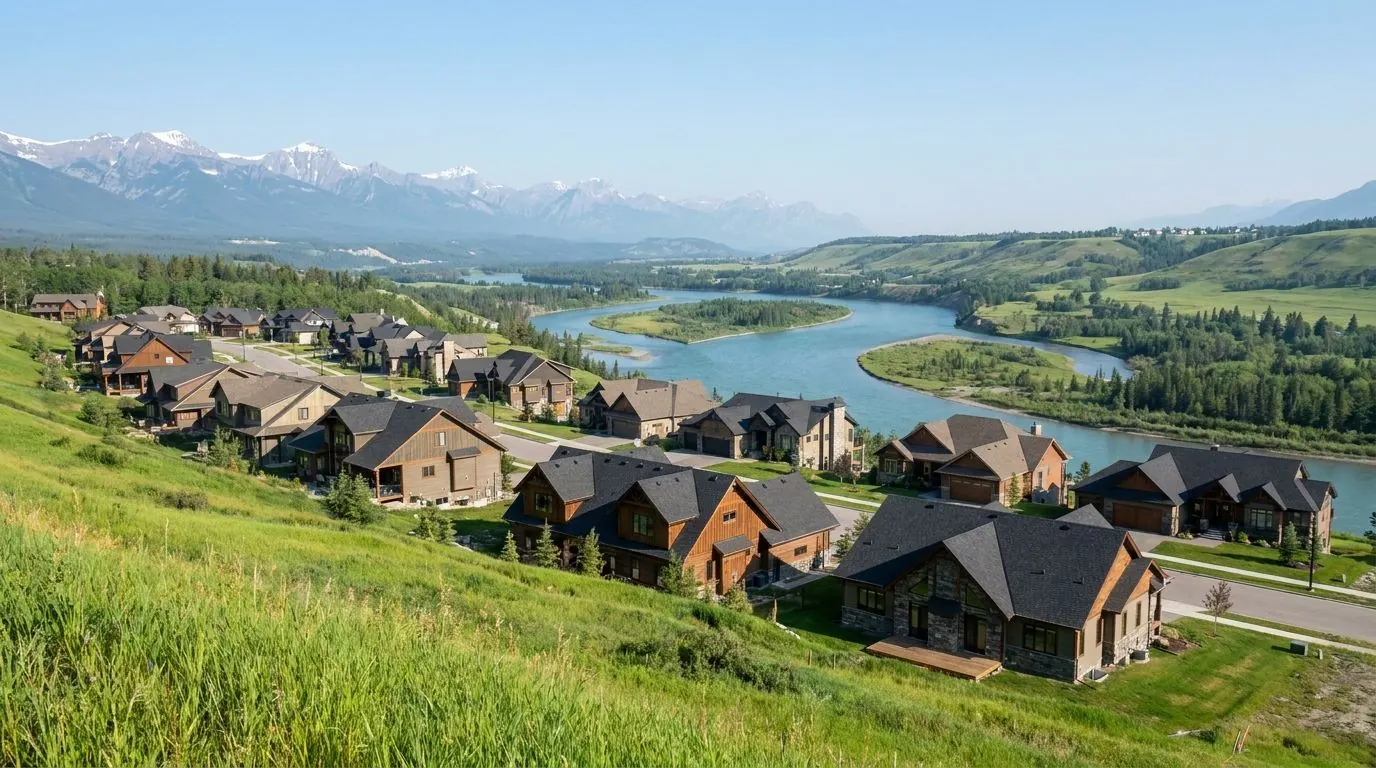
Cochrane sits on the Bow River west of Calgary, and parts of the town are built on valley slopes that decide how a dig is planned. The Town's plan for Rivercrest describes post-glacial kettle topography with moderately steep slopes of 15 to 20 degrees and about 50 m of relief. We excavate basements, retaining wall bases, drainage and slope work in Cochrane with the grade, the soil and the runoff worked out before a machine arrives.
At a Glance
- Municipality
- Town of Cochrane
- From our downtown office
- About 40 minutes west on Highway 1A
- Typical servicing
- Municipal water and sewer
- Postal prefixes
- T4C
Lots, Homes and Sites in Cochrane
Cochrane has grown quickly. It was incorporated as a town in 1971, once its population had passed 800; the 2024 municipal census counted 37,011 residents, and the Town reports 43.1% growth since 2016. The census lists 21 neighbourhoods, from Downtown and the East End to Fireside, Heartland, Riversong and Southbow Landing, and marks several as still growing. New homes on sloping lots are the work that sets Cochrane apart. A basement cut into a hillside often exposes one wall on the low side, which moves more earth than a flat-lot dig and turns rough grading into a genuine cut-and-fill exercise.
Slopes bring retaining walls, and a retaining wall is mostly excavation. A block, timber or boulder wall stands on a base trench cut to the designer's width and depth, a compacted granular levelling pad, drainage stone and a perforated pipe behind the wall, and, for taller walls, geogrid layers that reach back into the slope and need their own excavation. We dig and prepare that base and drainage; the wall itself is built by the landscaper or wall contractor. Tall walls, and walls holding up a driveway or a building, need an engineer's design, and the Town of Cochrane sets its own permit requirements for them, so we confirm those before the base is dug.
The rest of Cochrane's excavation is what any growing town needs: backfill and grading around new foundations, weeping tile and foundation drainage digs on finished homes, and haul-off of spoil where a sloping lot has nowhere flat to store it. On a hillside that last point matters more than it sounds. Spoil left at the top of a slope loads the ground above the excavation and washes down in the first heavy rain, so on steep lots the surplus is trucked off site and bring back only what the backfill needs, sorting topsoil from clean fill as it goes.
Neighbourhood Notes
Rivercrest
South of the Bow River and east of Highway 22, with the kettle topography, 15 to 20 degree slopes and about 50 m of relief described in its 2017 plan. Basements, walls and grading here are designed around the slope, with geotechnical input.
Downtown and the East End
Two of the 21 neighbourhoods in the Town's census. On built lots, the work is usually additions, garage pads, weeping tile and service line digs, done with compact machines and spoil hauled off as it is dug.
Fireside and Heartland
Named in the 2024 census. On lots under construction, backfill goes in against braced walls in lifts, and the final grade must slope away from the house even where the lot itself falls the other way.
Riversong and Southbow Landing
Also in the Town's census list. During construction on any phase near the valley, silt fence and covered stockpiles keep sediment on the lot instead of in the street drains and the river corridor.
GlenEagles, Heritage Hills and West Terrace
Named in the census with Bow Ridge, Glenbow, Greystone and Sunset Ridge. Where a yard steps down, retaining wall bases and the drainage behind them are the excavation that makes a wall last.
Highway 1A (Bow Valley Trail)
The main route from Calgary for our floats and trucks; Cochrane is roughly 40 minutes' drive from downtown. On hillside streets, loads are sequenced so a truck is never left waiting on a steep grade.
Highway 22
Named in the Rivercrest plan, which lies on its east side. Gravel, drainage stone and backfill for sites near it can come in without long runs through residential streets.
Permits and Locates in Cochrane
Authority having jurisdiction: Town of Cochrane
Permits in Cochrane come from the Town of Cochrane, which runs its own building permits and inspections, so confirm with the Town what a basement, a retaining wall or a grading change needs before work is booked. Cochrane North and Cochrane Lake are different: both are Rocky View County communities, not part of the town, and the County issues permits there. We place the Utility Safety Partners request for utility-owned lines three or more full working days out, allow extra time in peak season, and have marks refreshed if the job runs past their expiry, which is 30 calendar days at most. On a sloping site we re-check paint marks after heavy rain, and remember that a mark shows a line's position, never its depth.
The Excavation Work Cochrane Calls For Most
Deep Basement Excavation
Full and walkout basement digs for new custom homes on open lots and acreages.
Retaining Wall Base Excavation
Wall base trenches, compacted levelling pads and drainage. We dig; your builder builds.
Slope Stabilization & Erosion Control
Runoff diversion, benching, riprap, silt fence and revegetation on slopes and banks.
Foundation Backfilling & Perimeter Grading
Compacted backfill against new foundations and a perimeter grade that sheds water.
French Drain & Weeping Tile Excavation
Digs to the footing, new perforated tile in clear stone, and yard French drains.
Site Clean-Up & Material Haul-Off
Dirt, clay, rock and debris sorted, hauled off and the site left clean.
Close to Cochrane
Excavation in Cochrane: Questions
Do you build retaining walls in Cochrane?
Are Rivercrest's slopes typical of all of Cochrane?
Can spoil from a Cochrane basement dig stay on the lot?
Digging in Cochrane?
Call or send the details. Aspen Excavating works from downtown Calgary, and we will look at the site and the access before we price it.