Airdrie Excavation for New Homes & Nose Creek Lots
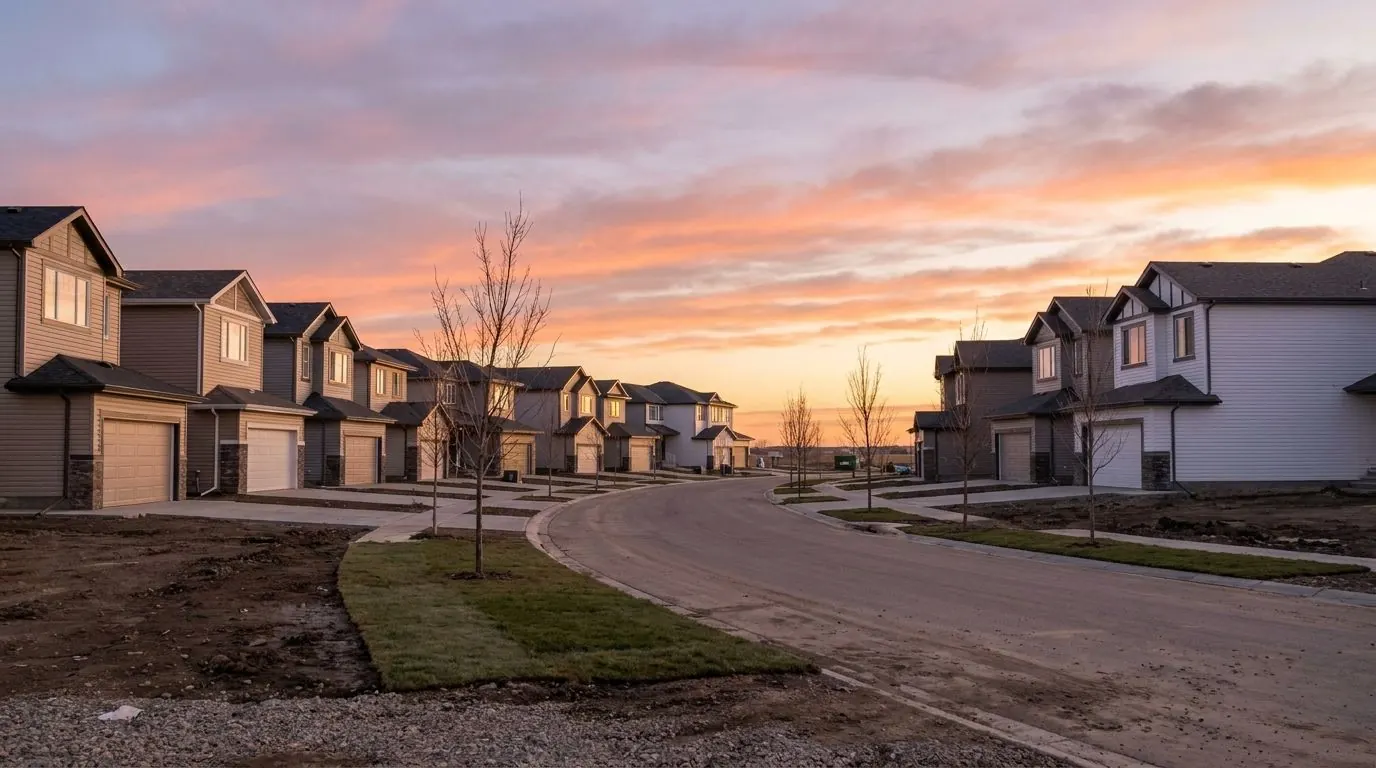
The City of Airdrie issued 1,623 housing permits for new homes in 2025, and its 2026 municipal census counted 93,957 residents, growth of 4.35%. In a city building that fast, much of the excavation work is new construction: basement digs, backfill, grading and service trenches, from the newest communities to lots on the low ground along Nose Creek. We work for builders and homeowners across Airdrie, about 34 km north of our downtown Calgary office.
At a Glance
- Municipality
- City of Airdrie
- From our downtown office
- About 30 minutes north on Highway 2
- Typical servicing
- Municipal water and sewer
- Postal prefixes
- T4A, T4B
Lots, Homes and Sites in Airdrie
Airdrie's census series shows how quickly it has grown: 10,434 people in 1986, 28,297 in 2006, 61,842 in 2016 and 93,957 in 2026. For a builder, a new-home basement here is a repeatable sequence: strip and stockpile topsoil, dig to the staked elevation with over-dig for the footing forms, keep the hole free of water and frost, backfill once the foundation walls are braced and damp-proofed, and rough grade to the approved lot grading plan. Running that on a phase schedule depends on trucks, spoil space and the next lot being ready at the same time, so we plan truck cycles and stockpiles across the street, not just on one lot.
Finished homes bring a second kind of work. Detached garages need pads dug, compacted and graded; garage power and secondary suite feeds need shallow trenches for electrical conduit; and settled backfill against a foundation wall or a weeping tile problem needs an exterior dig down to the footing. On a built-out street that means compact machines, protecting fences, driveways and landscaping, and hauling spoil off rather than piling it on the lawn. Every one of these starts with a locate, and the power run to a detached garage is a customer-owned line that the utility will not mark.
Airdrie was incorporated as a village in 1909 and is now a city of about 86 km², reached from Calgary on Highway 2, the Queen Elizabeth II Highway, and crossed by Highway 567, Veterans Boulevard. It is its own municipality, with its own building, permits and inspections process, so Calgary's lot grading slopes and service connection rules do not simply carry over. We build to the approved drawings and the City of Airdrie's requirements for each job, and we ask the City where sump and weeping tile discharge may go rather than assuming the answer from the city next door.
Neighbourhood Notes
Southwinds
Listed as a new community in the City's 2026 census. New-phase lots mean basement digs to builder elevations, backfill and rough grading on a production schedule, with the next lot's trucks sharing the street.
Nose Creek low ground
The City describes the land around Nose Creek as historically wet and prone to seasonal flooding. On lots near the creek, expect water in deeper excavations and plan pumping and drainage before the dig starts.
Highway 2 (QEII)
Highway 2 is our route between downtown Calgary and Airdrie, about 34 km by road. Gravel, backfill and export loads move along it, so we time truck cycles around the phase schedule.
Veterans Boulevard (Highway 567)
Mapped as Highway 567 and Township Road 272. Sites with access close to it can take deliveries with less heavy traffic on residential streets.
Bayside, Canals and Coopers Crossing
Three of the communities in the City's 2026 census. Where homes are finished, garage pads and service line digs are done with compact machines and plywood or mats to protect driveways and yards.
Ravenswood, Reunion, Sagewood and Windsong
Also counted in the 2026 census. On lots still under construction, the key excavation step is backfill against braced, damp-proofed walls in lifts, so settlement does not show up as a sunken flowerbed next spring.
Big Springs, Hillcrest, Meadowbrook and Midtown
Counted in the census alongside Kings Heights, Luxstone and Williamstown. For weeping tile or foundation drainage repairs on built homes, we dig to the footing, leave the drain exposed for the trade, then backfill and regrade.
Permits and Locates in Airdrie
Authority having jurisdiction: City of Airdrie
Permits in Airdrie come from the City of Airdrie through its building, permits and inspections section, not from Calgary or Rocky View County, so a basement, garage, retaining wall or service connection is cleared with Airdrie's own permit staff before a dig date is set. Locates go through Utility Safety Partners at least 3 full working days before digging, and longer in busy construction season. Locate marks show where a line is, not how deep it is, so within 1 m either side of a mark we expose the line by hand or by hydrovac before a bucket goes near it. Customer-owned lines, such as a feed to a detached garage or shop, need a private locate.
The Excavation Work Airdrie Calls For Most
Deep Basement Excavation
Full and walkout basement digs for new custom homes on open lots and acreages.
Foundation Backfilling & Perimeter Grading
Compacted backfill against new foundations and a perimeter grade that sheds water.
Mass Earthworks & Site Grading
Cut and fill, topsoil stripping and laser or GNSS grading to design elevations.
Shallow Utility Trenching
Narrow trenches for gas, electrical conduit, fibre and suite power feeds.
French Drain & Weeping Tile Excavation
Digs to the footing, new perforated tile in clear stone, and yard French drains.
Site Clean-Up & Material Haul-Off
Dirt, clay, rock and debris sorted, hauled off and the site left clean.
Close to Airdrie
Excavation in Airdrie: Questions
Do Calgary's excavation and grading rules apply in Airdrie?
How deep does a basement dig go for a new Airdrie home?
Is a lot near Nose Creek harder to excavate?
Digging in Airdrie?
Call or send the details. Aspen Excavating works from downtown Calgary, and we will look at the site and the access before we price it.