SE Calgary Excavation for Homes & Industrial Sites
Southeast Calgary is two kinds of work in one quadrant. It holds the city's largest industrial belt, where slabs, pavement and yard soil come out before a site is rebuilt, and a long run of homes from Inglewood and Ramsay to Lake Bonavista, Mahogany and Seton. We break out concrete and asphalt, sort and export soil, prepare subgrades and dig residential basements and drainage across both.
At a Glance
- Municipality
- City of Calgary
- From our downtown office
- South and east of downtown along Deerfoot Trail
- Typical servicing
- City water, sanitary and storm mains
- Postal prefixes
- T2G, T2H, T2C, T2J, T2Z, T3M, T3S
Lots, Homes and Sites in Southeast Calgary
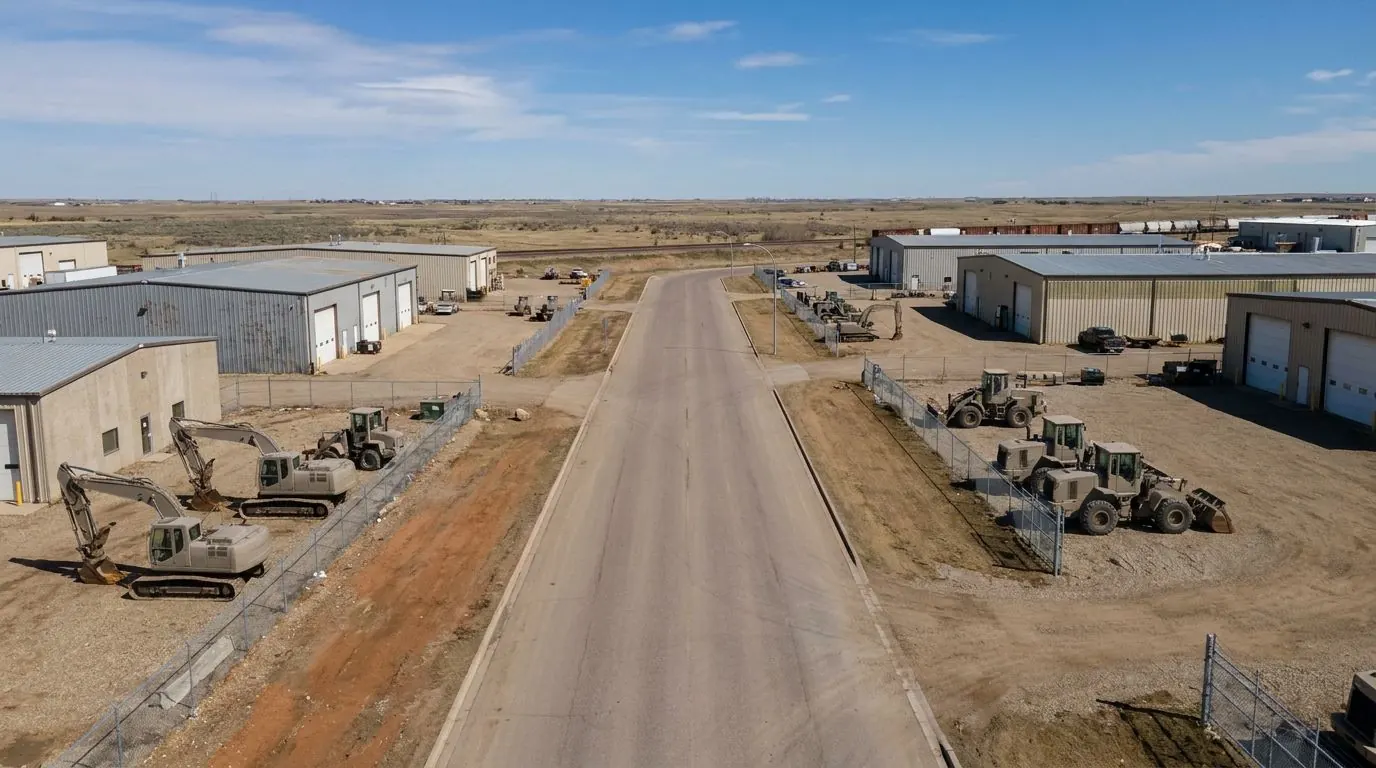
By the City's data, 21 communities whose addresses are mainly SE are classed as industrial, more than in any other quadrant. They include Foothills, Highfield, Alyth/Bonnybrook, Burns Industrial, Ogden Shops, Shepard Industrial, East Shepard Industrial, Starfield, Great Plains, Golden Triangle, Fairview Industrial, East Fairview Industrial, Eastfield, Forest Lawn Industrial, Valleyfield, South Foothills and Glendeer Business Park, with Manchester Industrial about 78% SE. Industrial excavation here usually starts with what is already on the ground: floor slabs, loading aprons and parking lots broken out with an excavator-mounted breaker, rebar separated, and concrete, asphalt and soil kept in separate piles so each load goes to the right place.
Inglewood and Ramsay are the SE's inner-city communities, and Downtown East Village addresses to SE as well, though it belongs with the downtown core. Ogden, Fairview, Albert Park/Radisson Heights, Forest Lawn and Southview are 1950s-era communities by the City's structure data. Acadia, Willow Park, Maple Ridge, Lake Bonavista, Bonavista Downs, Parkland, Queensland, Midnapore, Dover, Penbrooke Meadows, Forest Heights and Red Carpet are largely 1960s–70s. In these streets, the work runs from infill demolition and basement digs in Inglewood and Ramsay to sewer service replacement, garage slabs and foundation drainage on houses that are staying.
Newer communities fill out the rest of the quadrant. Deer Ridge, Deer Run, Douglasdale/Glen, McKenzie Lake, Sundance, Riverbend, Erin Woods and Diamond Cove are 1980s–90s communities. McKenzie Towne, Copperfield, Auburn Bay, Mahogany, New Brighton, Cranston, Seton, Walden, Legacy, Rangeview, Chaparral and Belvedere date from the 2000s onward, and some are still building out. Here we dig new-home basements, backfill foundations, correct yard drainage and prepare bases for retaining walls, patios and detached garages.
Neighbourhood Notes
Inglewood & Ramsay
The SE's two inner-city communities, with Inglewood along the Bow and only a small part of Ramsay in the mapped flood zones. Infill demolition and basement digs here get a flood-map check for the parcel and a plan for close neighbours and old services.
Ogden & Ogden Shops
Two communities sharing a name: Ogden is a 1950s-era residential community and Ogden Shops is classed industrial. One week can mean a shop floor breakout in one and a house sewer service trench in the other.
Forest Lawn & Albert Park/Radisson Heights
1950s-era communities; Forest Lawn Industrial is a separate industrial community. Garage and slab removal, service replacement and knock-downs on redevelopment lots make up most residential work.
Lake Bonavista, Willow Park & Maple Ridge
Largely 1960s–70s suburbs. Exterior weeping tile, basement floor breakout, backyard regrading and garage slabs are the usual jobs on homes that stay standing.
Riverbend, Douglasdale/Glen & Cranston
Bow River communities, the first two from the 1980s–90s and Cranston from the 2000s onward, each with part of its area in the mapped 2013 flood extent. We read the City's flood mapping for the lot before any basement-level excavation and set up to pump if water appears.
Foothills, Highfield & Alyth/Bonnybrook
Industrial communities by the City's classification. Slab and asphalt breakout, soil testing coordination, utility trenching and pad rebuilding are the typical sequence.
Shepard Industrial, Starfield & Great Plains
Industrial communities where yard and building expansions bring stripping and grading, subgrade compaction and granular base for new pads and parking areas.
Mahogany, Auburn Bay, Seton & Legacy
Communities of the 2000s onward, some still building out. New-home basements, foundation backfill and yard drainage corrections are the work, tied to the lot's approved grades.
Permits and Locates in Southeast Calgary
Authority having jurisdiction: City of Calgary
The City of Calgary issues development and building permits in the SE. For site work, one threshold is useful to know: a development permit for stripping and grading is not required when the area is less than 1,000 square metres, or when the work is already covered by an existing development permit or development agreement; larger industrial regrading should be checked with the City before the machines arrive. Deep excavations follow Alberta's OHS Code: once a worker is in a trench deeper than 1.5 m, and closer to the wall than its depth, the sides must be cut back or supported, and any temporary protective structure in an excavation deeper than 3 m must be designed by a professional engineer. Alberta's pipeline rules also require a search for any pipeline within 30 m of a ground disturbance, which we build into the locate request.
The Excavation Work Southeast Calgary Calls For Most
Concrete Slab & Asphalt Breakout
Driveway, slab, patio and parking lot tear-outs with clean saw-cut edges.
Commercial Pad Prep & Parking Lot Excavation
Building pads and parking lot subgrades built in tested lifts to civil drawings.
Hazardous Soil Removal & Export
Impacted soil dug to the consultant's limits, kept separate and exported with records.
Site Clean-Up & Material Haul-Off
Dirt, clay, rock and debris sorted, hauled off and the site left clean.
Infill Lot Digging & Tight-Access Excavation
Mini and midi excavator digs on narrow infill lots beside neighbouring homes.
Foundation Backfilling & Perimeter Grading
Compacted backfill against new foundations and a perimeter grade that sheds water.
Close to Southeast Calgary
The core, Beltline, Eau Claire and Downtown East Village: tight sites under City streets.
Inner-city infills in Altadore and South Calgary out to the newer west-side communities.
A Foothills County hamlet in acreage country on the Highway 552 corridor.
A lakeside city east of Calgary whose Quick Trench program vets excavation contractors.
Excavation in Southeast Calgary: Questions
What happens to concrete and asphalt from an SE industrial breakout?
Do you test the soil before digging on an old industrial lot?
What backfill do you use around a new foundation in Seton or Mahogany?
Digging in Southeast Calgary?
Call or send the details. Aspen Excavating works from downtown Calgary, and we will look at the site and the access before we price it.