Hazardous Soil Removal & Export in Calgary
We excavate and export impacted soil on Calgary sites to the limits your environmental consultant sets. Clean overburden is kept apart from impacted material, loads leave covered with a manifest and a weigh ticket, and the hole is backfilled only after the consultant confirms the walls and floor.
The Problem It Solves
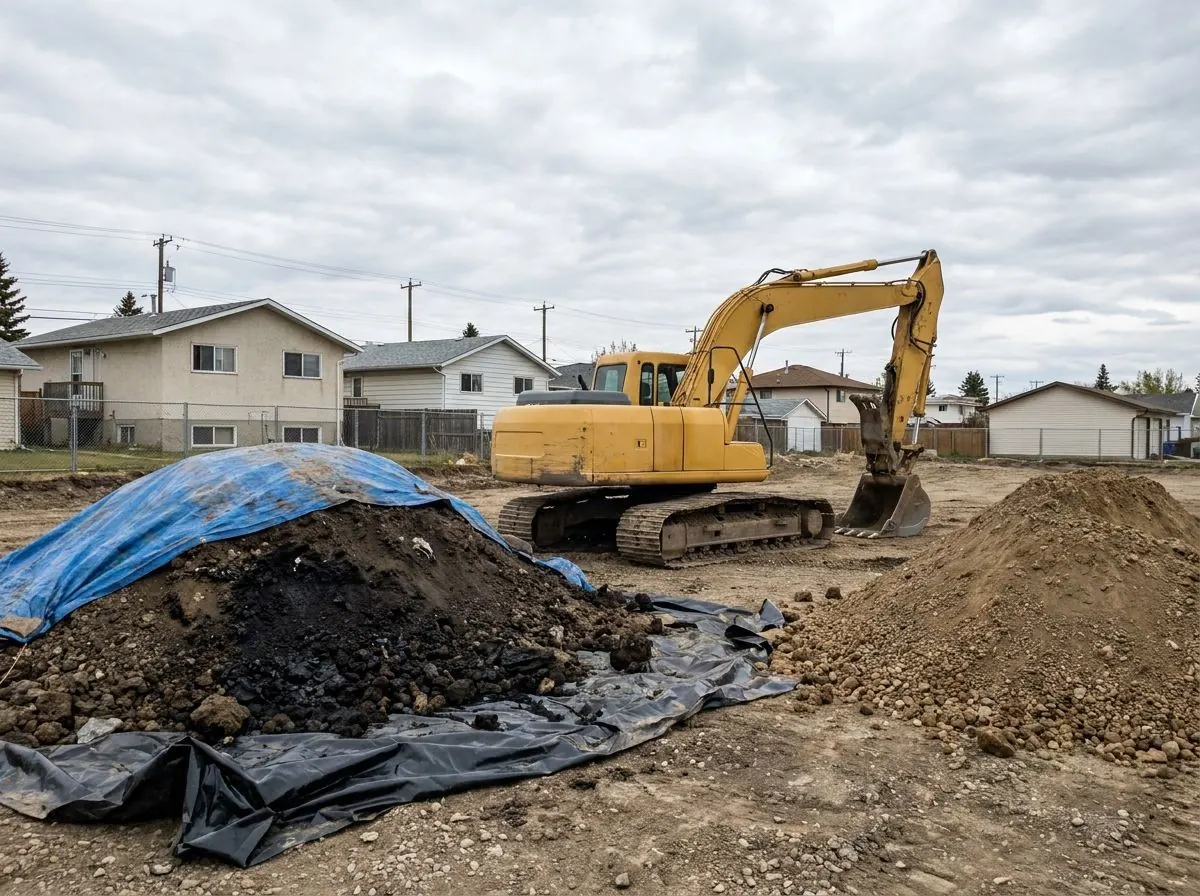
Contaminated soil usually shows up at the worst moment. A redevelopment on an old commercial or industrial lot starts digging for a foundation, and the operator smells fuel or sees stained, grey-black soil in the bucket. From that point the excavation is no longer a routine dig: the soil has to be assessed, and anything impacted has to be handled and disposed of as a waste with a documented route. Every load that has already left the site to a clean-fill destination is now a question, the soil still on site cannot be mixed back in, and the building schedule sits while the owner finds out what is actually in the ground.
The cost of contamination is driven largely by volume, and volume is decided by how carefully the dig is done. When an excavator takes impacted soil and the clean soil around it in the same bucket, all of it becomes impacted material. A pile of clean clay that touches a pile of fuel-stained soil becomes one pile. Contaminated tonnage that could have been a few truckloads becomes many, and each of those loads has to go to a receiving facility that will accept it, with paperwork that has to match.
Then there is the record. A lender, a buyer or a regulator reviewing the site later will ask what was removed, how much, where it went, and how the consultant knew the rest of the site was clean. If the weigh tickets are missing, the manifests do not match the loads, or nobody can show which stockpile went where, the remediation may have to be proven again. Poor records can undo good digging.
How It Works
We work under the direction of the owner's environmental consultant, and we say so plainly: we are not the consultant. The consultant carries out the Phase I and Phase II environmental site assessments, sets the excavation limits against the applicable Alberta Tier 1 or Tier 2 guidelines, field-screens soil as it comes up, and takes the confirmatory samples that decide when the hole is done. Our job is to dig exactly what they mark, keep material streams separate, move it safely and hand back complete records. Disposal management on our side means no load moves without confirmed acceptance, every load is manifested and weighed, and the paper trail is reconciled with the consultant; the certification of the soil itself is the consultant's and the laboratory's.
Segregation starts before the impacted zone is opened. Clean topsoil and overburden above the impacted layer are stripped and stockpiled well away from the work, and impacted soil goes to its own lined stockpile or straight into trucks. The excavator works in cells, taking thin cuts where the consultant is screening so a clean wall is not overdug. Water that collects in the excavation is held for the consultant's direction rather than pumped to the street or a storm inlet.
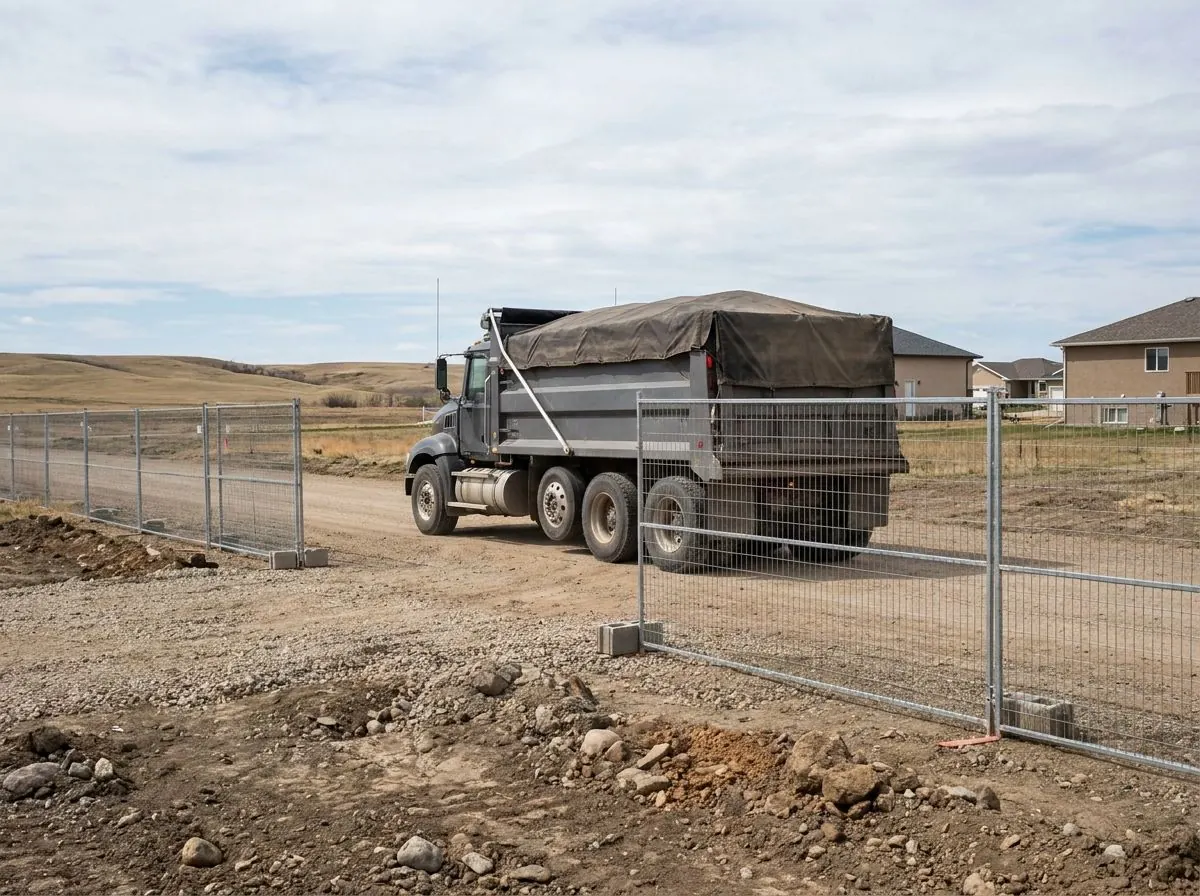
Loads leave the site typically lined and tarped, each with a manifest that names the source and destination and a weigh ticket from the receiving facility. Tracks and tires are cleaned before trucks reach the street so impacted soil does not travel beyond the site. When the consultant's confirmatory results show the walls and floor meet the target guideline, we backfill with clean imported fill in compacted lifts. You get a finished excavation and a file of tickets and manifests that matches the consultant's report load for load.
How the Job Runs, Step by Step
Read the assessment and the consultant's plan
We start from the Phase II environmental site assessment data and the consultant's remediation plan, not from a guess at the surface. That plan sets the lateral and vertical limits of the impacted zone, the guideline the soil is being measured against and where confirmatory samples will be taken. We check those limits against locates, property lines, footings and any structures that must stay. If the plan leaves the dig depth open, we price and schedule for the range and agree how over-dig is directed.
Confirm the receiving facility and paperwork
No impacted load moves until the owner or consultant has a receiving facility that has accepted the material. For a City of Calgary landfill, hydrocarbon-impacted soil for final disposal needs an industrial waste permit, and the City may refer the generator to a third-party remediation vendor instead. We set up manifests, load counts and the weigh-ticket routine with the consultant before the first truck is booked, so every load is recorded the same way from day one.
Strip clean overburden and open the impacted zone
Clean topsoil and overburden are stripped and stockpiled separately, upwind and uphill of the impacted area where the site allows. The impacted zone is excavated in cells while the consultant screens the soil, and anything that screens clean is kept out of the impacted pile. Where workers must enter an excavation deeper than 1.5 m, the walls are sloped or protected, and spoil stays at least 1 m back from the edge. Any water in the hole is left for the consultant to decide how it is handled.
Load, cover, weigh and record
Impacted soil goes into dump trucks that are typically lined and always tarped before leaving, and each load carries its manifest. Tires and tracks are cleaned at the site exit so no impacted soil reaches the street. Weigh tickets from the receiving facility are collected for every load and matched to the manifest the same day. If a load is rejected or redirected, it is recorded and the consultant is told before the next truck leaves.
Confirm, backfill and close out
The consultant samples the excavation walls and floor and compares the laboratory results with the target guideline. If a sample fails, we take the additional cut the consultant marks and wait for the next result, rather than backfilling on hope. Once the excavation is confirmed, we place clean imported fill in compacted lifts and restore grade. The owner receives the tickets and manifests so the consultant's closure report and the trucking record agree.
Equipment on This Job
Full-size excavator with clean-up bucket
A machine above roughly 10 t with a smooth-lip bucket cuts clean, controllable faces at the edge of the impacted zone, so the consultant can screen a true wall and over-dig stays small. The reach lets it load trucks without driving through the impacted cell.
Compact track loader
It manages separate stockpiles of clean and impacted soil on lined pads without mixing them, and moves clean imported fill for backfill. Low ground pressure lets it work on poly sheeting without tearing through to the ground below.
Tandem and tri-axle dump trucks
Tandems fit tight urban sites and short hauls; tri-axles carry more per load on open sites. Either way the box is typically lined, the load is tarped, and every truck carries a manifest to the receiving facility and returns with a weigh ticket.
Pump and holding tank
Water that gathers in an impacted excavation is pumped to a holding tank rather than discharged, so the consultant can have it sampled and decide on disposal. Keeping the floor dry also lets the consultant see and sample the base properly.
What Decides the Specification
The assessment sets the job. A Phase I environmental site assessment typically reviews records, past land use and site conditions to decide whether contamination is likely, without sampling. A Phase II collects soil and groundwater samples for laboratory analysis; Alberta's own remediation guidance refers to the laboratory data reports from a Phase 2 environmental site assessment. Those assessments commonly follow the CSA Phase I and Phase II standards. What they find defines where the impacted zone is, how deep it goes and whether groundwater is involved, which is what we plan the excavation around.
The guideline sets the finish line. The Alberta Tier 1 Soil and Groundwater Remediation Guidelines, 2024 edition, give generic guideline values for a range of sites within a given land use, so the same soil can meet the guideline on one land use and not on another. Tier 2 explains how those values can be modified for a specific site. The consultant chooses the approach, and that choice decides how far the excavation goes. The soil type decides how cleanly the limit can be cut: stiff clay holds a clean vertical face, while sand and gravel slough and spread.
Code, Safety and Permit Notes
Contaminated soil is not clean fill. The City of Calgary defines clean fill as natural, unprocessed soil excavated from uncontaminated sites, and says that generally any commercial business or industrial site will need its clean fill tested before disposal. Hydrocarbon-impacted soil for final disposal at a City landfill requires an industrial waste permit, and the City notes the generator may be referred to a third-party vendor for remediation. We do not name a landfill that accepts contaminated soil, because acceptance depends on the permit, the material and the facility, and that is arranged with the consultant for each project.
Alberta's OHS Code excavation rules apply in an impacted dig exactly as in a clean one. Protection is required where a worker is in an excavation more than 1.5 m deep and closer to the wall than its depth, temporary protective structures in excavations more than 3 m deep must be designed by a professional engineer, and spoil piles must sit at least 1 m back from the edge with a face no steeper than 45 degrees. Buried facilities must be located before the ground is disturbed. Site-specific health and safety requirements for working with impacted soil come from the consultant's plan.
General guidance only. The municipality, Alberta’s safety codes and the engineer of record, where there is one, decide what applies to your job.
Around Calgary
Calgary's largest industrial belt sits in the SE, with long-established districts such as Alyth/Bonnybrook and Manchester Industrial, which runs along the SW–SE line. When older commercial and industrial lots in areas like these are sold, refinanced or redeveloped, a Phase I and, where it flags a concern, a Phase II assessment commonly come before the excavation, and any impacted soil has to be separated from clean clay before the foundation dig can go ahead. The age and history of the land use is what the assessment looks at, not the address.
The same work appears in smaller form across the city: a former service station corner, a site where fuel was stored or a shop floor with a long history of oil use, being turned into housing or a new commercial building. On those lots space is tight, so separate stockpiles, truck staging and wheel cleaning have to fit inside a small footprint. In the NE industrial districts, such as Meridian along the NE–SE line, larger yards can give more room to stage clean and impacted material apart, which makes segregation easier and helps keep over-dig small.
Often Done Alongside
Site Clean-Up & Material Haul-Off
Dirt, clay, rock and debris sorted, hauled off and the site left clean.
Residential Building & Garage Demolition
House and garage teardown, foundation removal and a level lot for the next build.
Commercial Pad Prep & Parking Lot Excavation
Building pads and parking lot subgrades built in tested lifts to civil drawings.
Where We Do This Work
Calgary, quadrant by quadrant
Acreage country
Neighbouring cities and towns
Contaminated Soil Export: Questions We Get
Do you test the soil or tell us whether it is contaminated?
What is the difference between a Phase I and a Phase II ESA?
Can hydrocarbon-impacted soil go to a Calgary landfill?
How do the Tier 1 guidelines decide how much soil comes out?
Who handles utility locates and permits?
Get a Written Estimate for Contaminated Soil Export
Send the basics and we will come back with questions or a time to look at the site. Drawings, a geotechnical report or photos of the access all help.
Considering Contaminated Soil Export?
Call Aspen Excavating or send the details. We will look at the site, tell you whether contaminated soil export is the right scope, and price it in writing.